Plan your perfect mix of anchorages, marinas, and must-see spots.
After years of cruising the Pacific Northwest, I’ve developed a bit of a ritual when it’s time to plan the next adventure. Whether I’m setting out for a weekend or a full summer of gunkholing, here’s how I map it all out with help from trusty tools, a few sticky flags, and some solid boater intel.
Step 1: Pull Out the Tools of the Trade
No plan starts without the holy trinity of West Coast cruising resources:
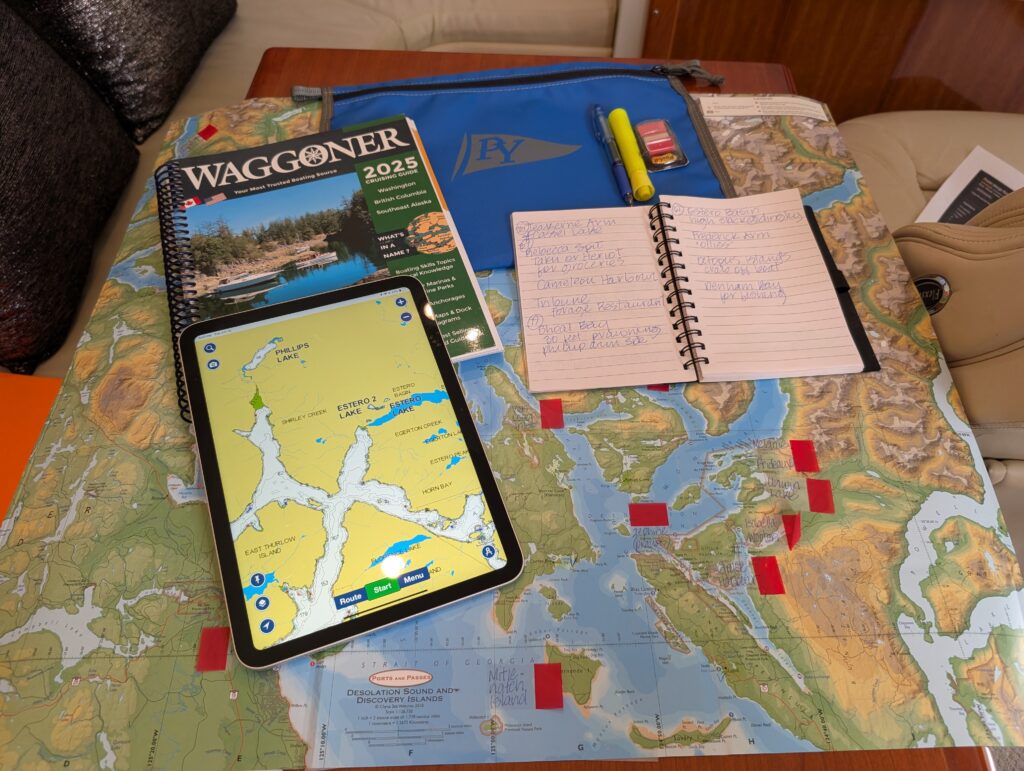
- Ports and Passes – My well-worn, coffee-stained copy is basically my second brain. It tells me tides, currents, and when not to attempt certain passes.
- Laminated, Durable Charts – Because sometimes you spill, and you will use a good chart over and over, so you want it to last. I use red sticky notes to mark destinations that I want to visit. And because I use the chart over and over, I highlight the areas I have visited with a yellow highlighter.
- The Waggoner Guide – Equal parts cruising Bible and travel blog, this gem is full of hidden coves, marina info, and boater-approved tips. If Ports and Passes tells me when to go, Waggoner tells me why.
- Navionics on the iPad – My digital BFF. I use it for route planning, but I also know that I really only want to travel two to four hours per day, and Navionics helps me do that. Pro tip: download your charts for offline use if you aren’t using Starlink or heading to a marina with WiFi.
Step 2: Gather the Crew (aka The Intel Session)
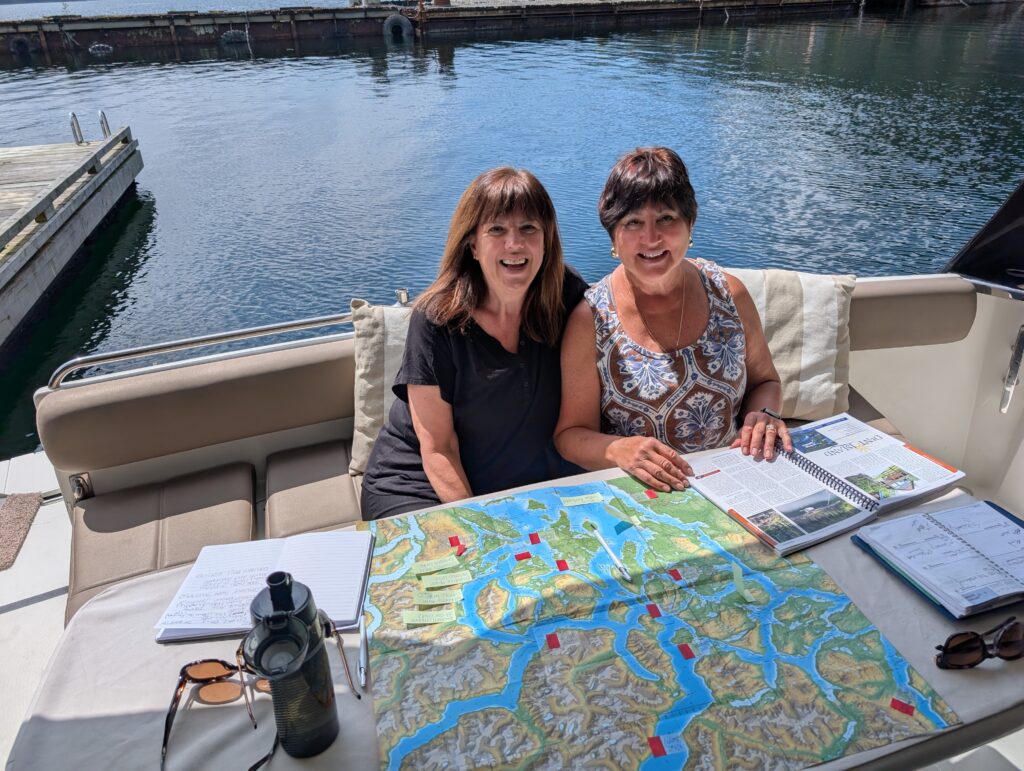
Next, I pour the wine, grab the sticky flags, and sit down with boating friends. This is when the magic happens.
I ask, “What was your absolute favourite anchorage last summer?” or “Where did you get the best cinnamon bun between here and anywhere?” And just like that, my route begins to shape itself. Word-of-mouth recommendations are gold. I’ll always trust a cruiser’s lived experience over a brochure.
This is also where we talk logistics:
- Do we want to anchor out every night or splurge on a few marinas?
- Are we provisioning at the start, or doing a “shop as you go” plan?
- What are the best areas for dog walking, crabbing, hiking or prawning?
It’s a casual chat, but the notes I take during these sessions form the backbone of my trip.
This is my BFF, Gina – she is a wealth of information!
And Don’t Forget the Digital Recon: Blogs & YouTube Are Gold
In addition to chatting with my boater buddies, I always do a little digital deep dive before I finalize a route. Boat blogs and YouTube channels are absolute treasure troves of firsthand info. Anchorage walkthroughs, marina reviews, what the docks are like, where to tie your dinghy, and even how buggy it might be in July. (Pro tip: if three different videos mention mosquitoes in the same cove, believe them and pack the citronella.) I usually search the destination + “anchorage review” or “cruising guide” and see what comes up. There’s nothing like seeing the layout of a dock or a cove before you go. You’ll feel like you’ve already been there, and that kind of intel is worth its bandwidth in gold.
Step 3: The Big Mix – Anchorages + Marinas + Provisioning Stops
Cruising is all about balance. I love a serene, secluded bay where the only sounds are eagles and my dog gently snoring on deck. But after ten days of off-grid anchoring, I start fantasizing about fresh fruit and a dinner out.
So I design my trip around a rhythm:
- Anchor for 4–10 days in quiet, dreamy spots. Think hikes to lakes, coves, and anywhere with space to paddleboard or toss out the crab traps.
- Then hit a marina for a night or two. Fill the water tanks, plug into shore power, do laundry, and resupply fresh food. Maybe even grab a meal I didn’t have to cook. Luxury!
This keeps things flexible, practical, and let’s be honest, clean.
If you don’t have a water maker onboard, this pattern becomes even more important.
Step 4: Build in the Fun Stuff
Now comes the dreamy part: What do we want to do?
- Day trips by dinghy to lakes, waterfalls, or tucked-away beaches.
- Dog walking, is there a small dock or beach to put the dinghy on in the early morning and late at night?
- Tide pooling, fishing, swimming, and pretending I’m an off-grid goddess who can live off prawns and good vibes.
I’ll flag places with good hiking or easy access to trails. If I’m cruising with friends, I’ll make sure there’s room for raft-ups or a beach big enough for a sunset picnic.
Step 5: Leave Wiggle Room for the Weather (and Whimsy)
Here’s the golden rule: Always have a plan… and be ready to ditch it.
The weather shifts. A favourite bay is full. You fall in love with a place and want to stay an extra day. That’s part of the joy of cruising, freedom to adjust.
So while I plan in advance, I always leave some open-ended days and have “Plan B” anchorages mapped out. That’s where having both laminated charts and Navionics really helps, I can reroute easily.
Missy’s Favourite Resources for Planning a Boat Trip
- 📚 The Waggoner Cruising Guide – Local wisdom, anchorage tips, and hidden gems.
- 📘 Ports and Passes – A must-have for planning tides and currents.
- 🧭 Navionics App – Route planning, depths, and hazard avoidance at your fingertips. It will also calculate the time required based on your boat’s speed, giving you a pretty accurate arrival time.
- 🗺️ Laminated BC Charts – Because they survive everything (including lunch spills). A good selection on the Waggoner Website
- 💻 Boating Blogs & YouTube Channels I follow:
- Sunshine Coast Tourism
- Ahoy BC
- PacificNWboater
- SV Panope (for anchoring reviews!)
- Search for your boat type, I follow two Navigator channels, Pane e Vino and Elli-Yacht
- Search for the area you are cruising, ie Rebecca Spit
- And, of course, Missy Goes Boating for my recent Desolation Sound travels!
Plan the Trip, Live the Dream
Trip planning is a mix of charts, mugs of coffee, boat gossip, and a little bit of daydreaming. With the right tools and a flexible mindset, it becomes part of the adventure.
So whether you’re plotting a summer-long cruise or a long weekend getaway, pull out the charts, call your boater besties, and plan the kind of trip where laundry is optional, wine is not, and every bay has a new story to tell.
See you on the water. Sticky flags and all.