

- This event has passed.
Permanent Daylight Savings – Clocks DO NOT Fall Back!
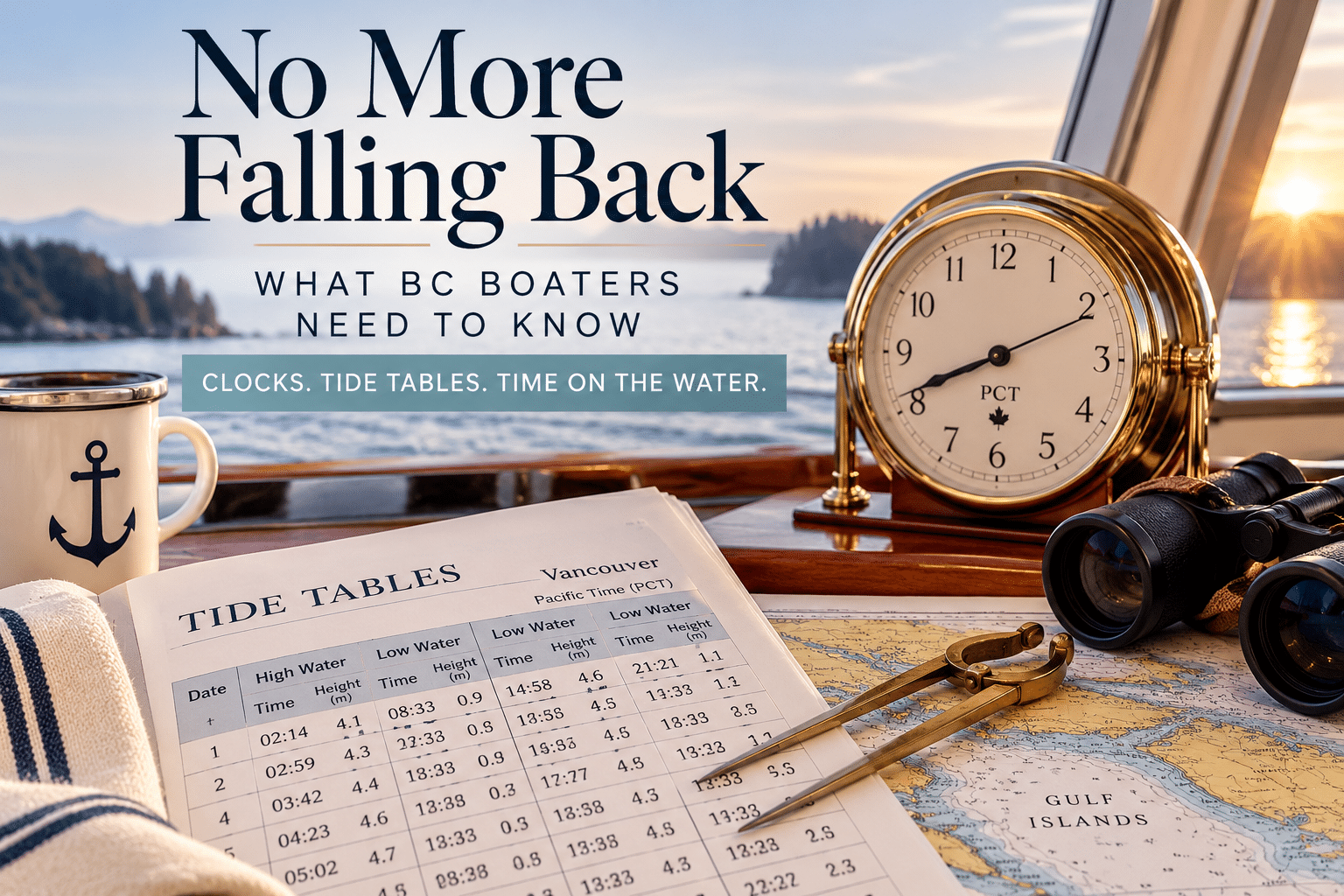
No More Falling Back: What BC Boaters Need to Know
For the first time, British Columbians won’t be turning their clocks back this November. After our final spring clock change on March 8, 2026, B.C. has adopted permanent daylight saving time, now called Pacific Time (PCT), and will remain at UTC−7 year-round. Personally, I won’t miss the twice-yearly ritual of resetting clocks, though it raises an interesting question for boaters: what happens to our tide tables?
The tides, of course, are blissfully unaware of government decisions. They will keep their familiar rhythms, but the clock times printed in tide tables depend on the time zone used to calculate them. Many Canadian tide predictions have traditionally been published in Pacific Standard Time (PST), which is UTC−8. If you’re using a tide table based on PST, you’ll need to add one hour to convert it to B.C.’s new year-round Pacific Time. However, electronic tide tables and navigation apps may already account for the change, so check the time zone indicated before making any adjustments.
For those of us navigating tidal passes, planning departures around slack water or calculating the best time to enter an anchorage, that distinction matters. An hour can make a considerable difference when currents are running strongly through a narrow passage. Before relying on a printed tide table, chartplotter, or favourite boating app, take a moment to confirm which time zone it uses. The clocks may have stopped changing, but the importance of getting our timing right certainly hasn’t.
