An Introduction to Orcas in the Pacific Northwest
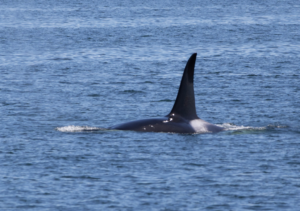
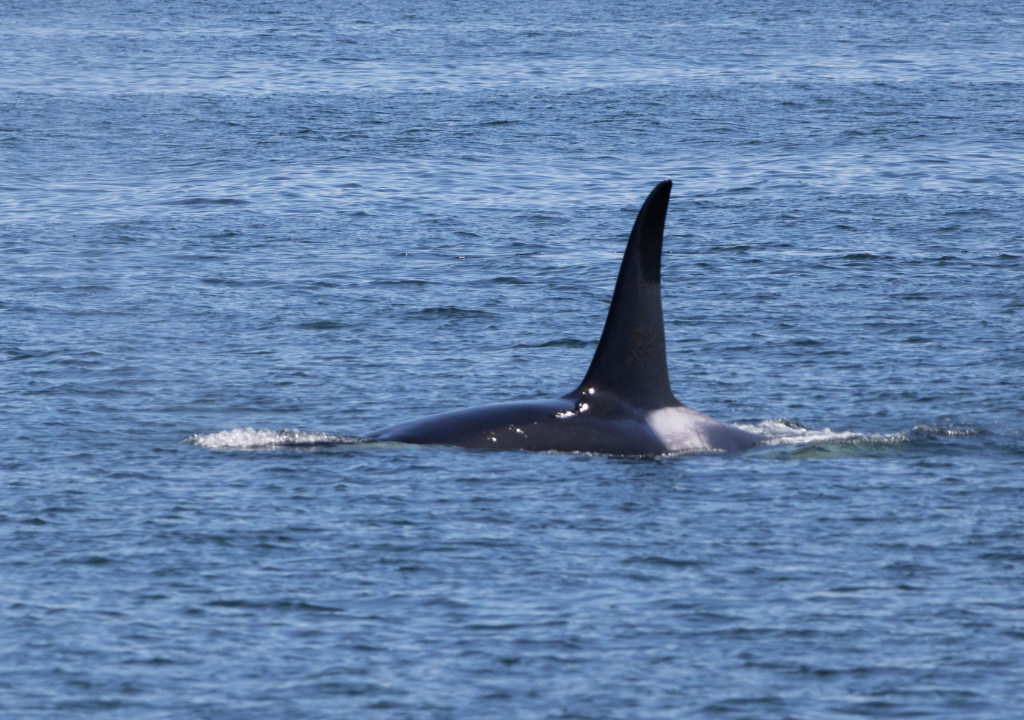
There is nothing that rearranges your nervous system quite like seeing a dorsal fin slice through the glassy waters off Vancouver Island. Orcas or killer whales are not just wildlife here. They are identity, geography, and responsibility wrapped into one black-and-white silhouette.
If you boat in the Pacific Northwest long enough, you will hear the shorthand: SRKW, NRKW, Bigg’s, and offshore. It can feel like alphabet soup, so let’s untangle it.
Should We Call Them Orcas or Killer Whales?
There is no biological difference between an orca and a killer whale; they are the same marine mammal, Orcinus orca, the largest member of the dolphin family. The name “killer whale” likely originated with early sailors who observed them hunting large whales and called them “whale killers,” a term that eventually morphed into “killer whale.” In recent decades, scientists and conservationists have increasingly used the name “orca,” drawn from the species’ Latin name, because it sounds less aggressive and better reflects our growing understanding of their intelligence, social bonds, and cultural complexity. In the Pacific Northwest, where resident populations are closely studied and protected, “orca” is often preferred, particularly when referring to endangered Southern Residents. The marine mammal hasn’t changed, but our relationship with them has, and the shift in language reflects that evolution.
The Three Ecotypes in the Pacific Northwest
Not all orcas are the same. In our waters, there are three distinct ecotypes, each with different diets, acoustics, behaviours, and social structures.
1. Residents
Fish-eating, highly social, and the most studied.
Residents are further divided into:
- Southern Resident Killer Whales (SRKW)
- Northern Resident Killer Whales (NRKW)
They primarily eat salmon, especially Chinook, and are extremely vocal. Their communication systems are complex, culturally inherited, and pod-specific.
2. Bigg’s Killer Whales (formerly “transients”)
Mammal-eaters.
Quieter.
More stealth-driven.
Bigg’s whales hunt seals, sea lions, porpoises, and occasionally other whales. Because they hunt mammals who can hear underwater, they are far less vocal than residents.
3. Offshore Killer Whales
Less frequently seen.
Travel in large groups.
Believed to eat sharks and fish.
Offshores tend to stay farther out to sea and remain the least understood of the three.
Now let’s get back to our local orcas:
Southern vs. Northern Residents
This is where things become more complex and more fragile.
Southern Resident Killer Whales (SRKW)
The SRKW population is endangered. As of recent counts, the population hovers in the mid-70s.
They are divided into three pods:
- J Pod – approximately mid-20s individuals
- K Pod – around the high teens
- L Pod – roughly mid-30s
(Exact numbers fluctuate due to births and losses.)
The Southern Residents face three major pressures:
- Low Chinook salmon availability
- Acoustic disturbance
- Genetic bottlenecking (in-breeding risk)
Because their population is small and relatively isolated, inbreeding is a growing concern. Studies show lower calf survival rates when genetic diversity decreases. Their calf survival rate has historically been lower than that of stable populations, largely due to nutritional stress and environmental pressures.
Northern Resident Killer Whales (NRKW)
The Northern Residents are more stable and number in the 300+ range. They are also fish-eaters, highly vocal, and socially complex, but their population health is stronger due to:
- Greater salmon access in northern waters
- Larger population size
- More genetic diversity
Acoustics and Culture
Residents are among the most acoustically rich marine mammals on earth.
Each pod has distinct dialects. Calves learn these vocal patterns from their mothers and family group. These dialects are cultural, not instinctive. This is one reason acoustic disturbance matters so deeply. Boat noise, engine frequency, and sonar all interfere with their ability to echolocate and communicate. For salmon-eating whales who rely on sound to find prey, this is not trivial.
Bigg’s whales, by contrast, are much quieter hunters.
Different diets.
Different sound strategies.
Different behaviours.
What Is a “Super Pod”?
A super pod occurs when multiple resident pods temporarily travel together. It can look like a black-and-white festival, with dozens of dorsal fins surfacing, socializing, breaching, and spy-hopping. These gatherings often occur during strong salmon runs. Super pods highlight something essential about resident whales. They are profoundly social.
Social Bonds and Family Structure
Resident killer whales live in matrilines.
That means:
- A mother and her offspring stay together for life.
- Even adult males remain with their mothers.
- Grandmothers often play critical roles in leadership and knowledge transfer.
There is strong evidence that post-reproductive females contribute to pod survival by guiding salmon hunting. Social bonds are deep, long-lasting, and structured. When a whale dies, it is not just a biological loss; it is a cultural one.
The Experts Studying Our Orcas
The Pacific Northwest is home to some of the world’s leading orca researchers.
At the University of British Columbia (UBC), Dr. Darren Croft has conducted extensive research on orcas’ social structure and population dynamics, including studies of the impacts of inbreeding. In Washington State, long-term field work has been conducted by researchers such as Dr. Ken Balcomb (founder of the Center for Whale Research) and field biologist Dave Ellifrit, who have tracked Southern Residents for decades. Their work on photo identification, acoustic analysis, and population monitoring forms the backbone of what we know today. These are not casual sightings. These are multi-decade research archives.
Boating Around Orcas
If you’re lucky enough to encounter killer whales while boating, calm and distance are everything.
In Canadian waters, boats must remain at least 400 metres away from Southern Resident killer whales. In U.S. waters, similar distance regulations apply depending on region and species designation.
Best practices:
- Slow to minimum speed.
- Shift your VHF to low power mode.
- Avoid crossing their path.
- Do not position yourself in front of their travel direction.
- Keep noise to a minimum.
These whales rely on sound. Your engine matters.
An Easy Way to Whale-Safe Boating – Take the MERS Course, it’s Free!
The Marine Education and Research Society (MERS) Whale Course is one of those quiet little upgrades that changes how you move through the water. Their online program walks you through whale identification, safe approach distances, and the regulations that protect orcas, humpbacks, and other marine mammals along our coast. It’s practical, clear, and genuinely empowering, especially if you want to cruise confidently while respecting the ecosystem we all depend on. You can take the course online here.
Here are five Pacific Northwest–focused websites for learning more about orcas and their conservation:
- Georgia Strait Alliance – https://georgiastrait.org
A BC-based environmental organization focused on protecting the Salish Sea, including advocacy and education around Southern Resident killer whales and vessel noise reduction. - Center for Whale Research – https://www.whaleresearch.com
The primary long-term research body monitoring Southern Resident killer whales, including pod numbers (J, K, L), photo identification catalogues, and population updates. - Orca Network – https://www.orcanetwork.org
A Washington State organization that tracks sightings, educates the public, and supports Southern Resident recovery efforts. - Fisheries and Oceans Canada (DFO) – Marine Mammals – https://www.dfo-mpo.gc.ca
Official Canadian government information on regulations, approach distances, recovery strategies, and current population data. - University of British Columbia – Marine Mammal Research Unit – https://mmru.ubc.ca
Academic research on killer whale behaviour, acoustics, population genetics, and conservation, including work led by researchers such as Dr. Darren Croft.
These sites offer a strong mix of scientific research, conservation updates, boater regulations, and current population information specific to the Pacific Northwest.
Here are five top apps that help you track, report, and learn about whales in the Pacific Northwest:
- WhaleReport App (Ocean Wise) – A sightings reporting and identification tool tied to Ocean Wise’s citizen science network. Users can log encounters and contribute to data on whale presence and behaviour.
- Happy Whale – A global cetacean identification and sighting platform that uses photo recognition to help identify individual whales and track their movements over time.
- Orca ID (by Center for Whale Research) – Designed specifically for the Southern Resident killer whale population; lets you browse orca profiles using dorsal fin photos and learn about J, K, and L pod individuals.
- Whale Alert (US/Canada) – Provides real-time or near-real-time marine mammal sightings, relevant speed zones, and navigational advisories to help boaters reduce disturbance and stay informed.
- iNaturalist – A broader wildlife observation app, but very useful for logging orca and other marine mammal sightings, sharing photos with an active community, and contributing to science.
Each of these apps supports different aspects of whale engagement, from reporting and identification to navigation safety and community science, and can be valuable tools for boaters who care about orca conservation and respectful wildlife encounters.
A Final Word – Why Orcas Matter
Orcas in the Pacific Northwest are not just wildlife icons.
They are indicators of ecosystem health.
They reflect salmon abundance.
They reveal acoustic conditions.
They carry cultural memory across generations.
When you see a dorsal fin offshore, you’re not just witnessing a whale. You’re witnessing a family. And if you boat these waters, you share the responsibility of making sure they remain here strong, fed, and undisturbed for decades to come.