There’s a particular kind of relief that comes from spotting a bright white mooring buoy bobbing gently in a quiet bay. It’s the boating equivalent of finding a parking spot right where you want to be. No anchor math. No second-guessing holding. Just a civilized, tidy way to tie up and get on with enjoying the view.
If you cruise the British Columbia coast, mooring buoys are one of those small luxuries that quietly make boating life better. They’re practical, environmentally responsible, and once you know how to use them, surprisingly convenient. Let’s talk about why recreational boating mooring buoys matter, where to find them, and how to use them like someone who’s done this before.
Why Recreational Mooring Buoys Matter in British Columbia
British Columbia’s coastline is a boater’s dream: endless islands, tucked-away inlets, and sheltered bays that feel a world away from real life. It’s also a delicate ecosystem. Mooring buoys allow visitors to enjoy the beauty without damaging it.
Unlike anchoring, which can tear up eelgrass beds and sensitive seabed habitats, mooring buoys are permanently installed and designed to protect the marine environment. When you pick up a buoy instead of dropping the hook, you’re making a small but meaningful choice that helps preserve BC’s coastal waters.
For recreational boaters, they also mean:
- Predictable holding
- Less stress in tight anchorages
- Faster setup for lunch stops or overnight stays
- A cleaner, quieter anchoring experience
It’s one of those rare boating wins where convenience and conservation go hand in hand.
Where to Find Mooring Buoys When Boating in BC
If you’re wondering where to boat in BC and tie up without anchoring, mooring buoys are more common than you might think, especially in popular cruising areas.
Here’s how I find them:
- Canadian Hydrographic Service (CHS) charts
Buoy locations are clearly marked and updated regularly. - BC Parks and Parks Canada websites (links below)
Marine parks often publish maps showing buoy locations, fees, and time limits. - Local harbour authorities and marina websites
Some harbours offer seasonal or year-round mooring buoys, often with online payment options. - Cruising guides
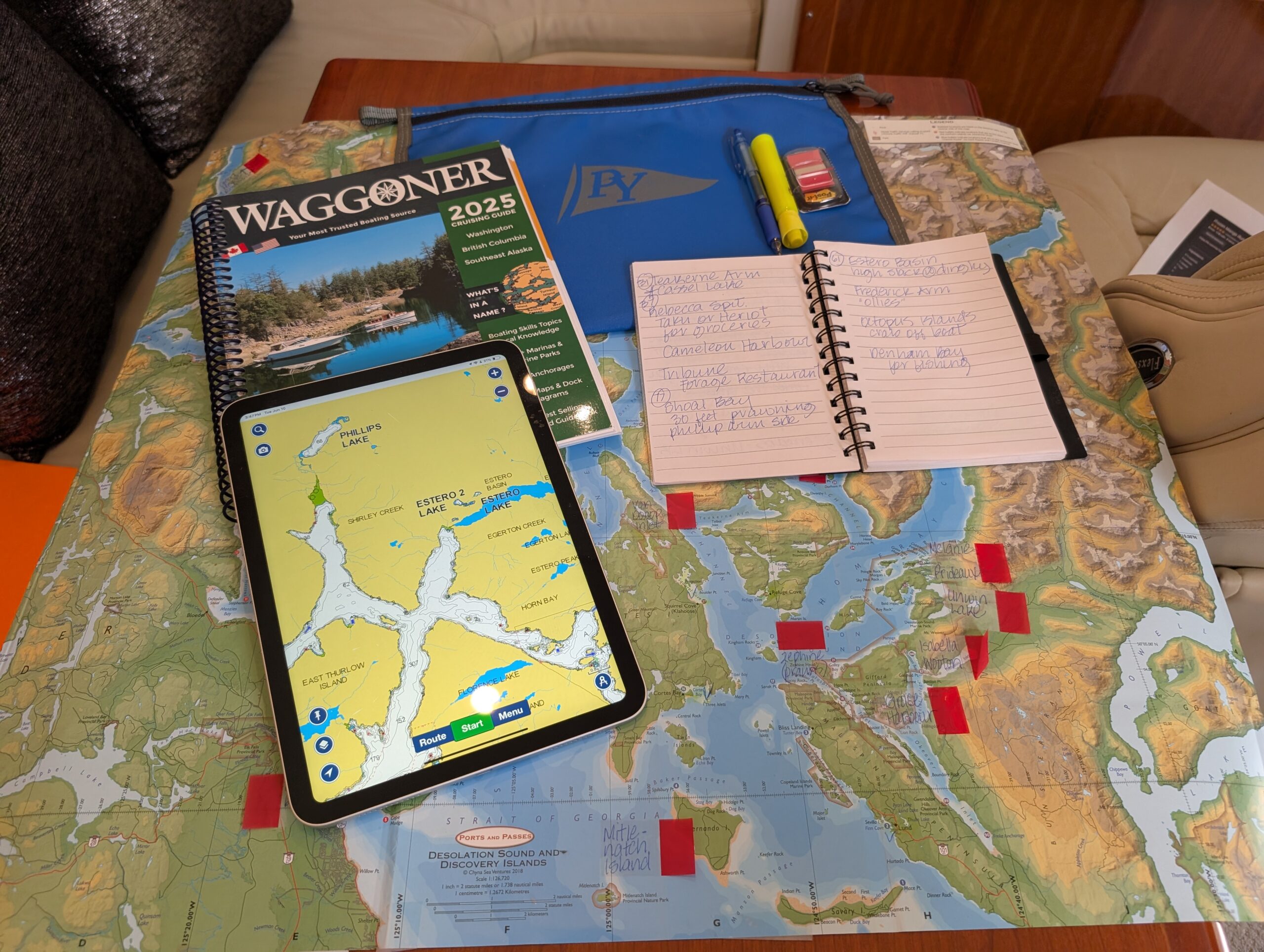
The Waggoner Cruising Guide and Dreamspeaker Series are classics for a reason. They flag buoy locations, local quirks, and practical notes. - Navigation apps
Apps like Navionics Boating and iNavX overlay buoys, anchorages, and hazards right on your chartplotter or tablet.
Waggoner Cruising Guide is the number one purchased guidebook by recreational boaters seeking detailed information about marinas, anchorages, and waterways of the Pacific Northwest. Boaters will find over 300 maps and dock diagrams for easy reference; descriptions and amenities for over 500 marinas and marine parks; and over 780 best anchorages. In addition, local knowledge highlighted in red is provided for alerts and safe passage.

How to Tie Up to a Mooring Buoy (Without the Drama)
Let’s get practical. Tying up to a mooring buoy is simple, but a little preparation goes a long way.
Here’s how I do it:
- Approach slowly and deliberately
Ease in facing the wind or current. Slow is smooth; smooth is civilized. - Have your gear ready
Boathook out. Lines prepared. Crew briefed. - My preferred method
Many boaters pick up the buoy from the bow, but I find it much easier to grab it from the stern swim grid. I’ll hook the ring, feed a line through, then calmly walk it forward and secure it at the bow. - Secure properly
Thread your line through the ring or pennant, never through the buoy itself. Double it back, and secure both ends to your cleats. - Check for chafe
Especially if you’re staying overnight. Chafe guards are boring until you need them.
One thing to remember: boats on mooring buoys swing with the wind and tide. Give your neighbours space. This isn’t a rafting party unless signage explicitly says it’s allowed.
Mooring Buoy Etiquette Every Cruiser Should Know
Good manners afloat matter.
A few key rules when using recreational mooring buoys in BC:
- First-come, first-served
In peak summer, arrive early if you want a buoy. - Respect size limits and signage
Some buoys have length or weight restrictions for vessels. Usually under 50 feet. Princesss Louisa has a few for boats over 50 feet and under 70 feet. - Time limits apply
Many BC Parks buoys allow stays of up to 14 nights, sometimes less, during busy periods. - Pay the fee
Fees are often collected by park staff, kiosks, or online systems. It’s part of maintaining these amenities. The range is from $14 to $23 per night. - Keep it quiet and clean
No dumping. No excessive lighting. No generator marathons. We’re all here for the same calm.
Think of it as dock etiquette, just without the dock.
Mooring Buoys and Protecting BC’s Coastal Ecosystems
Using a mooring buoy isn’t just about convenience; it’s about stewardship. Anchoring in fragile areas can cause long-term damage that takes decades to recover. Mooring buoys help prevent that.
Pair buoy use with smart habits:
- Use pump-out facilities
- Avoid sensitive shoreline areas
- Secure loose gear instead of letting it drift
- Leave places better than you found them
Boating in BC is a privilege. Mooring responsibly helps keep it that way.
Tying It All Together
Recreational boating mooring buoys are one of the quiet heroes of cruising in British Columbia. They offer safety, simplicity, and peace of mind while protecting the very places we love to explore.
Knowing where to find mooring buoys in BC, how to tie up properly, and how to use them with care makes every trip smoother. Less stress. Less mess. More time for that second coffee or an unhurried walk ashore.
If you’re building your cruising confidence, this is one of those skills that pays off every single season.
Ready to Cruise Smarter?
If you’re planning next season now (which is when the best ideas happen), check out these links:
👉 Provisioning List
👉 Government of Canada Gulf Islands Park Reserve
👉 BC Marine Parks
Calm seas really do start with good preparation.