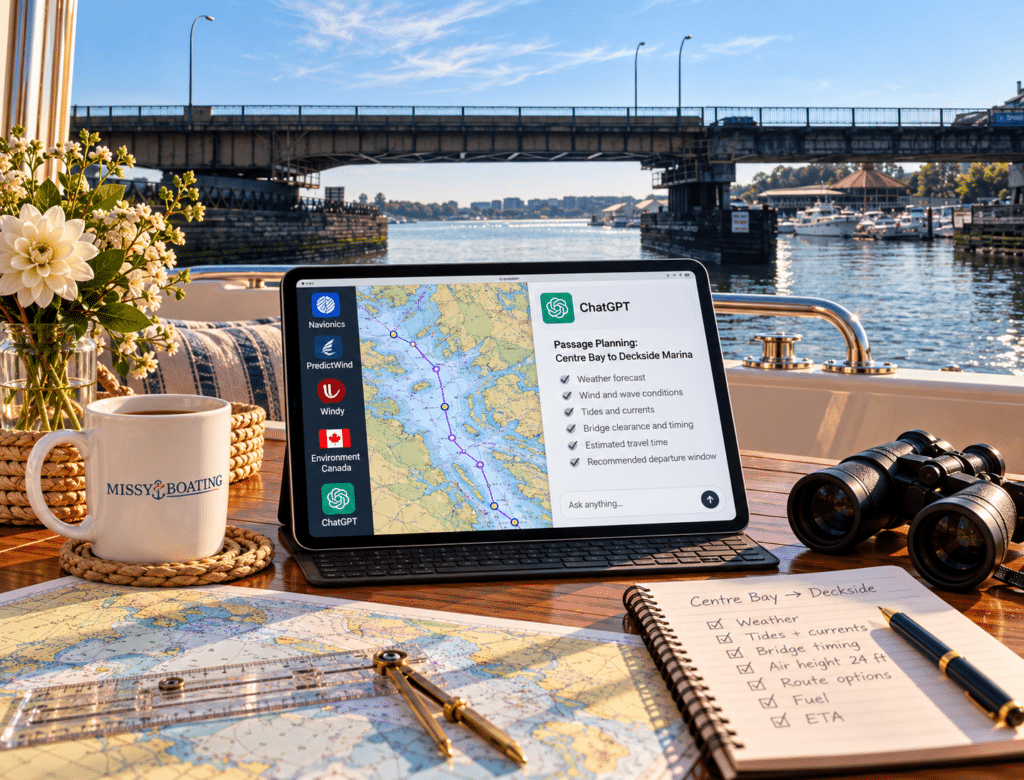
Using ChatGPT for Boat Navigation and Passage Planning
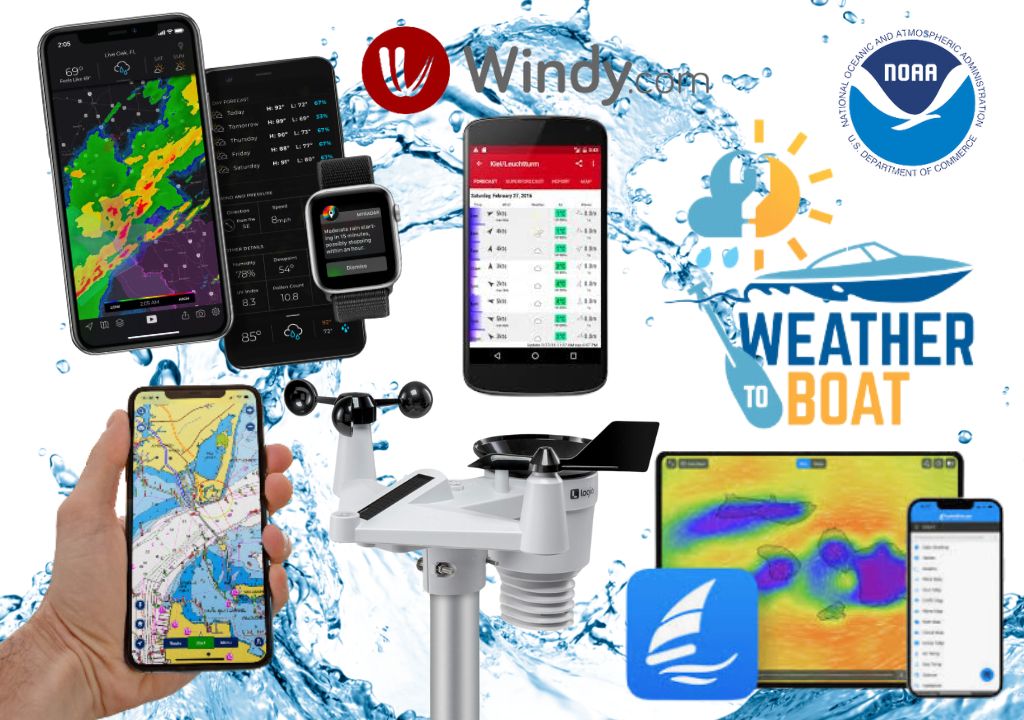
I use a surprising number of tools before I plan a trip. There is Navionics for charts and routing. Windy and PredictWind for weather models. Environment Canada for the official marine forecast. Canadian Hydrographic Service data for tides and currents. Then there is the information specific to our boat: our cruising speed, draft, air height and the conditions we are comfortable travelling in.
Recently, I decided to add another tool to the chart table! ChatGPT.
Not to navigate the boat. Not to replace my charts. And certainly not to sit at the helm while I wander off to make coffee. I wanted to see whether ChatGPT could take all those separate pieces of information and help me think through a passage. So, I gave it a real trip to plan.
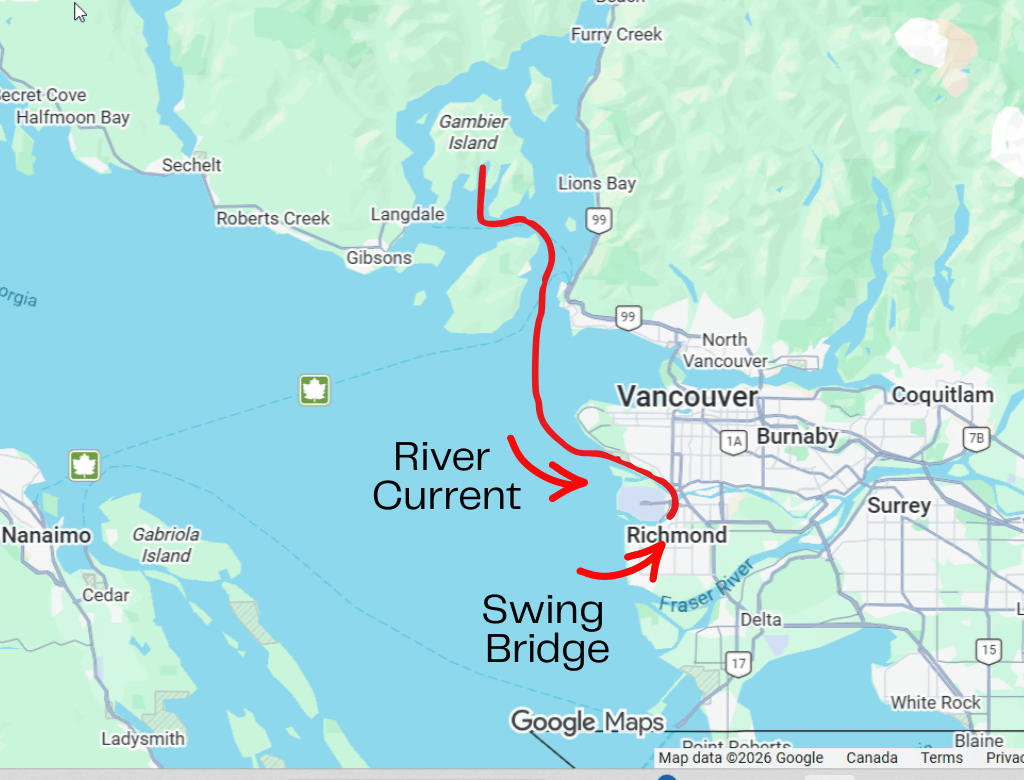
The Trip: Centre Bay on Gambier Island to Deckside Marina on the Fraser River
On the surface, it isn’t an especially complicated trip. But one rather important complication comes up near the end. To reach our marina, we have to pass through the Middle Arm swing bridge.
Our boat requires approximately 7.3 metres (24 feet) of air clearance, so bridge height matters. Current matters too. And the bridge cannot be opened during certain rush-hour periods because it forms part of an emergency transportation route. Suddenly, this isn’t simply: What will the weather be tomorrow?
It becomes: When should we leave? And that is a much more interesting question.
How I Used ChatGPT for Boat Navigation and Passage Planning
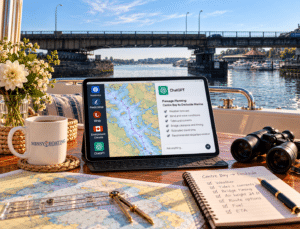
I told ChatGPT the tools I normally use: Navionics, Windy, PredictWind and Environment Canada.
Then I asked it to look at the same things I would look at when planning the trip:
- wind speed and direction
- wave height and period
- tides
- currents
- weather
- bridge restrictions
- approximate travel time
The first answer was useful. It was also wrong. And that may have been the most valuable part of the entire experiment.
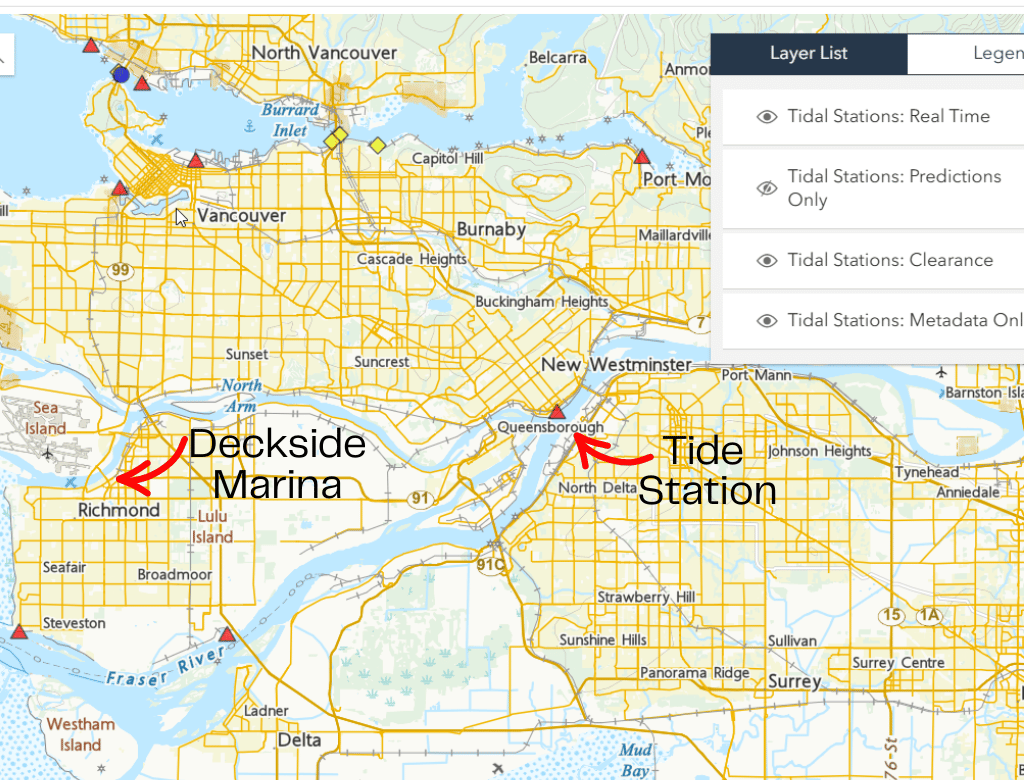
ChatGPT initially used Sand Heads as the tide reference for the bridge. I knew that wasn’t the tide station I normally use. For the Middle Arm of the Fraser, I use New Westminster (real-time, not predicted) and add one hour; that is local knowledge. So, I corrected it. I also clarified exactly which bridge we use. The calculations changed.
AI Is Only as Good as the Information You Give It
This was my first big takeaway. ChatGPT doesn’t know my boat unless I tell it. It doesn’t inherently know that As You Wish II needs 24 feet of air clearance. It doesn’t know which tide station I normally use, or which route I would choose in Navionics. Once I supplied those details, however, the conversation became much more useful.
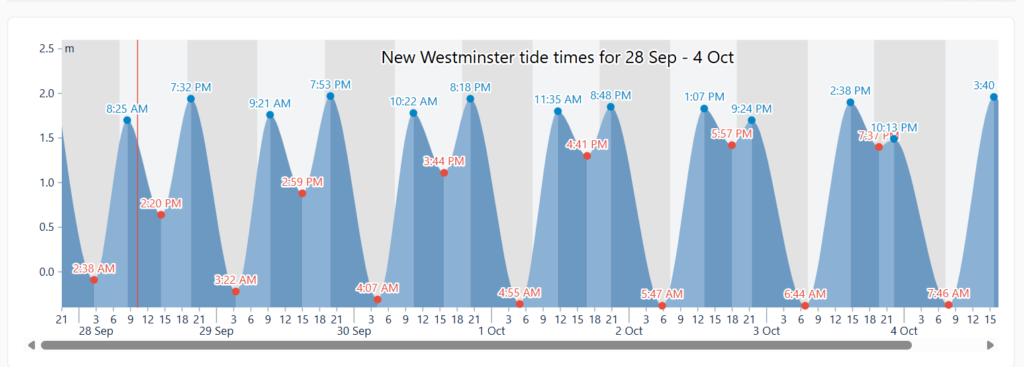
We looked at the New Westminster tide predictions and considered several possible arrival windows.
At first, an afternoon low tide looked interesting. But then we added the boat’s actual air-height requirement. That changed everything. Even at the lower water level, our calculated clearance beneath the closed bridge wasn’t sufficient.
We needed the bridge to open. That eliminated one option entirely.
Then we added another piece of information: the bridge cannot be opened between 4:00 and 6:00 p.m. Suddenly, instead of looking at a dozen weather and tide numbers, we had a practical passage-planning problem with clear constraints.
ChatGPT Became a Second Set of Eyes
This is where I found ChatGPT genuinely helpful. It wasn’t replacing Navionics or Environment Canada. It helped me connect the information from them.
For example: Navionics tells me where I am going and how far it is. Environment Canada gives me the official marine forecast. Windy and PredictWind let me compare weather models and see how wind and waves are expected to change throughout the day. Canadian tide and current predictions tell me what the water is doing. And our boat’s specifications tell me what is actually possible.
ChatGPT can take those separate pieces and ask, essentially:
Given all of this, what does a sensible day look like?
That’s useful.
But I Would Never Let AI Navigate My Boat
There is an important distinction here. I might use ChatGPT for passage planning. I would not use it as my primary source of navigational information. If ChatGPT tells me the wind will be 10 knots, and Environment Canada has issued a gale warning, I am not going to announce that the robot and I have taken a vote. Environment Canada wins. Every time.
The same applies to charts, Notices to Mariners, tide and current tables, bridge restrictions and navigation hazards. AI can misunderstand information. It can select the wrong reference station. Information can be outdated. And sometimes it can confidently produce an answer that sounds entirely reasonable but isn’t.
Which is exactly why the person operating the boat still needs to understand the information.
Knowing Your Boat Matters More Than Ever
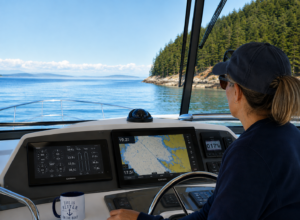
This experiment also reinforced something I’ve been thinking about all summer. The more I understand our boat, the more useful all of my navigation tools become. We have entered our boat’s draft, dimensions and other important parameters into our navigation equipment. I know approximately how much water I am comfortable having beneath us. I know our cruising speed. I know our air height.
Those aren’t trivia.
They are what turn generic information into information about our boat. A 3-metre bridge clearance means something very different to a small runabout than to a 58-foot powerboat requiring 7.3 metres of air clearance. ChatGPT can’t make that distinction unless I give it the information.
So, Would I Use ChatGPT for Boating Again?
Absolutely.
But perhaps not in the way people imagine when they hear the words AI navigation. I am using it as another resource. I’m asking it to sit beside me at the virtual chart table and help organize the questions. What happens if we leave an hour later? Which tide window works better? Will the wind be building or dropping while we’re underway? Can we reach the bridge before its restricted opening period? What information are we missing? Those are excellent questions for AI.
The final decision, however, remains exactly where it has always belonged.
With the captain.
Because good navigation isn’t simply knowing where you are going. It is understanding your boat, checking reliable sources, looking at the conditions in front of you and being willing to change the plan when one new piece of information changes the whole picture.
Apparently, ChatGPT can join that conversation. But I’m still keeping my hands on the wheel.