A practical guide for new boat owners who would rather learn smartly than the hard way.
There is a particular confidence that belongs to the first year of boating. You buy the boat, stand on the dock holding new lines, and suddenly imagine yourself transformed into the sort of person who simply “has a boat.” It is thrilling. It is glamorous. It is also the beginning of a masterclass in systems, weather, maintenance, storage, patience, and humility.
The first year can be one of the best years you’ll ever have on the water. Everything is new. Every cove feels discovered. Every successful docking deserves applause. But it can also be expensive and chaotic if no one tells you what actually matters.
So here is what I wish I knew in the first year of boating.
START AT THE DOCK
1. Build a Vessel Data Sheet on Day One
If I could go back, the very first thing I would do after buying the boat is create a vessel data sheet. You need a vessel data sheet from day one because the same information comes up again and again: engine serial numbers, filter sizes, belt numbers, battery details, paint codes, service dates, model numbers, and part numbers.
Instead of reinventing the wheel with every technician and every season, keep it all in one organized place. When something breaks or needs service, you can hand it to your technician and save time, labour, guesswork, and the inevitable hunt through old manuals and drawers. Knowing your boat inside out builds confidence!
It also helped me learn about my inverter/charger, battery bank, engine size, alternator output and a million other things that I couldn’t commit to memory! And make a few copies to keep on board; you can give them to your boatyard and technicians so you won’t have to repeat it over and over.
A little information goes a long way. This is the one I use:
To make it even easier, buy a sturdy binder. I use this one and keep all my pertinent information in ONE place. The Vessel Data Sheet is Page One!
13 Pocket Expanding File Folder includes a Zipper and Labels, with a 3 Ring Binder. Perfect for alll of your boat documents, insurance, moorage contracts, and contact information.

Your binder should include:
- Sale documents
- Survey results
- Marina details
- Insurance documents & contacts
- Registration papers
- Manuals
- Engine make, model, serial numbers
- Generator information
- Battery types, sizes, and install dates
- Oil and filter part numbers
- Belt numbers
- Impeller numbers
- Fuel filter numbers
- Water pump details
- Electronics model numbers
- Paint colours
- Canvas supplier info
- Service contacts
2. Learn Each System One at a Time
Many new owners stare at the engine room the way one might stare at the cockpit of a jet. Respectfully, but without comprehension. That’s normal. You do not need to know everything. You need to know the basics of each system. You won’t always have access to a technician, so it’s helpful if you can explain what is going on over the phone and know where all the components are located. This will get you started!
Mechanical
Know:
- How to start and stop the engines
- How to put the engines in gear
- What normal engine temperature looks like
- What sounds normal, and what does not
- What is your travelling speed and RPM
- Where seacocks and sea strainers lare
- How to check fluids
- How to inspect belts
- How to check a hose clamp
Electrical
Learn:
- The difference between AC and DC power
- Shorepower vs inverter vs generator
- How batteries charge
- What is your battery capacity
- What drains batteries quickly
- Where breakers and fuses are
- How to read battery voltage or monitor data
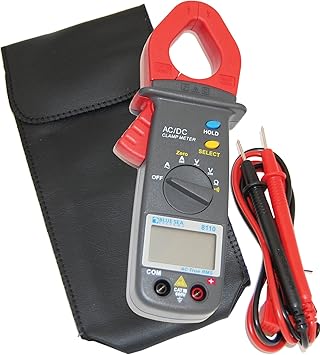
A must-have on board is a good multimeter!! Even if you can’t use it, it can help a technician diagnose problems remotely. This is the one I have on my boat.
A must-have onboard for testing electrical. The clamp allows measurement of AC and DC current in wires without disturbing the circuits or contacting live terminals.
Plumbing & Sanitation
Understand:
- Fresh water tank levels
- Water pump operation
- Hot water tank basics
- Heads, holding tanks and macerators
- What should never be flushed
Navigation & Electronics
Take a course. Join your local CanBoat (Canadian Power and Sail Squadron) or equivalent. Learn charts, aids to navigation, collision rules, weather basics, tides, and route planning.
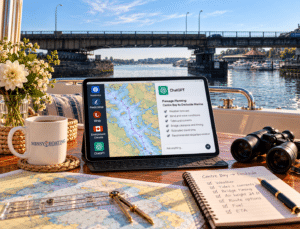
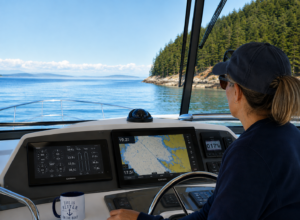
A good, newer chartplotter is not a luxury; it is a necessity. iPads, laptops and tablets are not designed for salt air or sea spray. And while they are useful on a boat, they should not be your first line of defence against a fogbank. A hard-wired chartplotter is your best bet.
Features worth considering:
- Clear charts that can zoom
- Radar integration
- Auto-pilot
- AIS targets
- Depth overlays
- Easy route building
- Repeat display capabilities to an iPad or tablet
- Engine data integration
- Consider having dedicated internet on board with Starlink
Being able to view charts from another helm seat or inside the salon is genuinely useful. Technology does not replace judgment. It supports it. Confidence rises when information improves.
Some tips:
- Learn your chartplotter functions before leaving the dock.
- Keep charts updated every season.
- If you are using software like Navionics, update it annually.
- Save your frequently travelled routes.
- Check tides and currents before every trip. Practice at home even when you are not boating so you can determine which apps you use most, such as Navionics, MarineTraffic, Tides Near Me, and Windy.
- Practice radar on clear days first so you can learn what the different targets look like.
- Learn the basics of the Automatic Identification System (AIS).
- Repeat navigation screens to an iPad if possible. Garmin, B&G, Lowrance, and Raymarine offer features that let you connect your iPad to store navigation routes, favourites, and vessel details. A great winter project at the dock!
- Know how to use your VHF radio. Take the course, it’s the law.
3. Learn to Run the Boat on Calm Days
The worst time to learn docking is in crosswind conditions with an audience and a line of people waiting behind you. The best time to learn is a sunny weekday morning with no drama. Use the first dozen outings intentionally. Don’t overcomplicate it. Leave the dock, turn around and come back to the dock.
Practice:
- Leaving the slip
- Returning slowly
- Turning in fairways
- Backing up in straight lines
- Throw a life ring in the water, come alongside and retrieve it
- Communication with crew
- Handling lines calmly
- If you have a larger boat with limited visibility while maneuvering, buy good headsets. They are my number one “must have”.
- An emergency situation where you have to get into the dinghy, do you have a ditch bag?
Choose good conditions:
- Light wind
- Slack tide
- High tide gives you more water
- Daylight
- Plenty of room
Hire a captain or instructor for a few sessions. Pay the money and do it properly. Even if your partner is experienced, having a neutral professional on board often prevents household diplomacy from becoming dockside theatre.
Spend an afternoon on a calm day to practice anchoring in shallow water, about 6 metres (20 feet). Practice setting and retrieving the anchor with no pressure. How will you communicate? Headsets (my recommendation) or hand signals?
Debrief and talk about what went well and, possibly, what you would do differently. Calm practice becomes future confidence.
Sena headsets make docking and anchoring far calmer by giving you clear hands-free communication when timing and teamwork matter most. They’re comfortable to wear, and stay secure when you bend to tie a line.

4. Maintenance Is Cheaper Than Emergencies
Every boater learns this eventually. The wise ones learn it early. Do small things before they become confidence-shattering things.
I purchased a stack of simple elementary school notebooks and have one for each engine, the generator, batteries, fuel, etc. Each time I perform maintenance or have a service, I write it down! It saves so much time when you can look back and see the exact dates and what was done. And they will fit easily in your super-organized boat binder.
Hilroy three-hole punched exercise books are a simple, affordable way to keep boat maintenance records organized and easy to access in a binder, perfect for tracking oil changes, repairs, part numbers, service dates, and all the little details that keep life afloat running smoothly.

Create recurring reminders in your phone.
Monthly or seasonal checks:
- Check bilges
- Inspect hoses
- Clean strainers
- Test pumps
- Examine belts
- Inspect docklines
- Replace tired fenders
- Service engines on schedule
- Open and close seacocks
- Check zincs
- Review safety gear expiry dates
- Keep records
If a pump cycles strangely, a hose looks tired, or something smells hot, pay attention.
PROVISIONING & GEAR
5. Provisioning Is a Skill, Not Grocery Shopping
Most first-year boat owners often provision like they’re shopping for home, but in a hurry. That usually means:
- Too much fresh produce
- Duplicate condiments
- No actual meals
- One heroic vegetable nobody touches
- Snacks that vanish by day one
Provisioning is different. You are managing:
- Limited storage
- Weight to carry to the boat
- Shelf life
- Fridge space
- Convenience
- Appetite after a long run
Think menus, not groceries.
Long-Life Staples
- Pasta
- Rice
- Couscous
- Crackers
- Instant Oats or Cream of Wheat
- Granola bars
Freezer Heroes
- Seafood you catch
- Burgers
- Bread or Wraps
- Cooked proteins
- Berries
- Ice blocks (make your own)
Multi-Use Favourites
- Eggs
- Parmesan
- Tortillas
- Lemons
- Butter
Easy Wins
- Breakfast burritos
- Pre-made soups and stews
- Pre-marinated proteins
- Good coffee
- Drinks you actually enjoy
When you’re a new boater, one of the smartest lessons to learn early is that boat meals should start simple. This is not the time to reinvent yourself by adding quinoa if you never eat it at home. Begin with the foods you already enjoy and know how to make well: easy pastas, wraps, grilled favourites, hearty breakfasts, and reliable snacks. Think of your galley like a favourite playlist: the same trusted hits that always work and keep everyone happy. Once you understand your storage, stove, and fridge space, and your rhythm on board, you can get fancy.
6. Buy Fewer Better Products
The marine industry would like you to believe every inconvenience requires a branded solution. Often it does not. Buy products that solve recurring annoyances.
My favourites:
- Nesting bowls
- Stackable clear bins
- Label maker
- Compact vacuum
- Quality cooler with reusable ice blocks (make your own)
- Decent flashlight or headlamp
- Good knife
- Proper non-slip mats
- Insulated mugs
- Microfibre cloths that actually work
The best products are not always “marine.” They are simply useful.
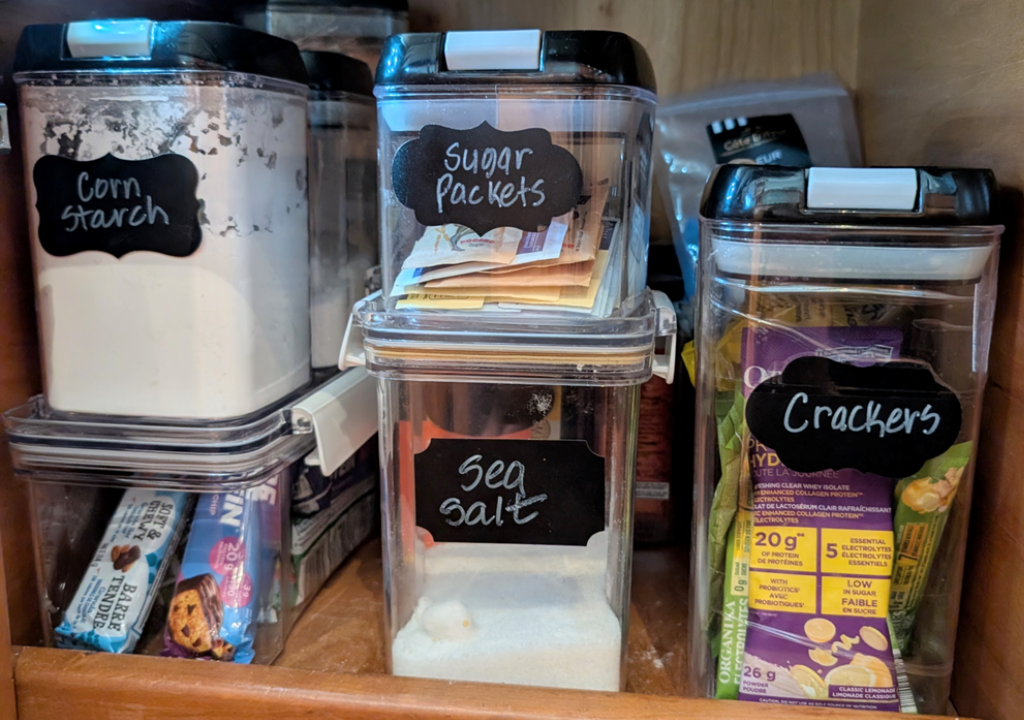
7. Storage Is About Systems, Not Space
People often say, “There’s no storage on this boat.” Usually, there is storage. There is just no system.
Use:
- Vertical space
- Shelf risers
- Bins and baskets
- Labels
- Drawer dividers
- Soft bags for odd lockers
- Hooks behind doors
Create zones:
- Coffee station
- Snacks
- Tools (metal tray with a handle)
- Cleaning supplies (plastic bucket with a handle)
- Shorepower gear (wrap bag with handles)
- First aid (in a cupboard, by the door, easy to grab)
- Entertaining items (clear zippered pouch)
- Spare parts (labelled plastic bins)
- Water toys
- Pet supplies (I have a drawer in the side stateroom)
Everything with a place, in its place! If you use it, return it. Clutter is expensive because it steals time.
8. Clothing Matters More Than You Think
During the first year of boating, I took far too many clothes. I ended up wearing the same items over and over. Now, I have three wardrobes, I cycle one for summer and one for winter, and I don’t keep them both on board at the same time. The third is the always-on board, which has foul-weather gear, pyjamas, undergarments, and a bathing suit!
What actually works:
- Layers
- Waterproof shell
- Warm mid-layer
- Good non-slip shoes
- Sunglasses
- Hat
- Gloves for handling lines
- One excellent technical jacket
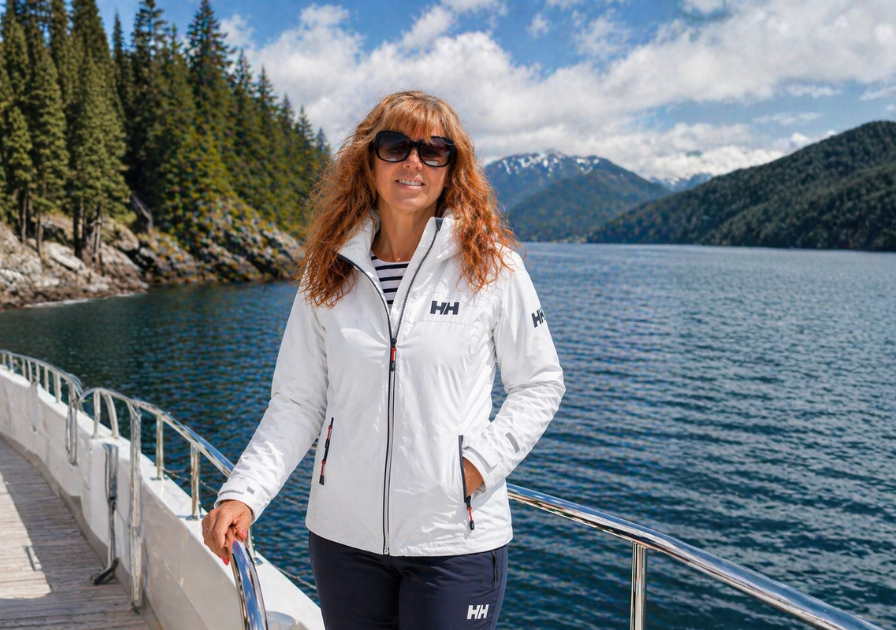
Brands like Helly Hansen have earned loyal followings for a reason. You do not need twenty cheap items. You need five reliable ones. The Pacific Northwest has four seasons, and you can enjoy each season on your boat with the right outfit!
LEARN CONSTANTLY
9. Books, YouTube, and Fellow Boaters!
You can compress years of learning if you stay curious.
Books
The Waggoner Cruising Guide is worth its weight in fuel.
Waggoner Cruising Guide is the number one purchased guidebook by recreational boaters seeking detailed information about marinas, anchorages, and waterways of the Pacific Northwest. Boaters will find over 300 maps and dock diagrams for easy reference; descriptions and amenities for over 500 marinas and marine parks; and over 780 best anchorages. In addition, local knowledge highlighted in red is provided for alerts and safe passage.

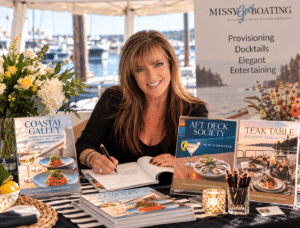
Shameless self-promotion, Missy Goes Boating Publications:
Coastal Galley – the basics of provisioning, organizing and cooking on your boat.
This is a practical, elegant guide for cruisers who want their time on the water to feel calm, capable, and genuinely enjoyable, especially when it comes to food, drink and entertaining.

Aft Deck Society – the art of the docktail.
Aft Deck Society is your guide to effortless docktails, complete with uniquely named cocktails and smart substitution ideas for when you can’t get to a store. It helps you host with confidence using what’s already onboard, beautifully, intentionally, and without the fuss.

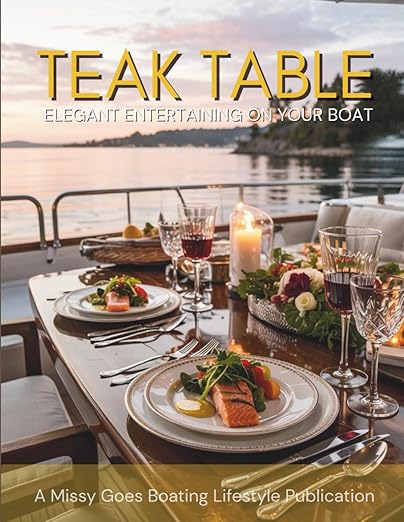
Teak Table – elegant entertaining on your boat.
Teak Table is your elegant guide to creating beautiful, relaxed meals onboard, complete with smart ingredient substitutions and practical solutions for when you can’t get to a store, so every gathering on the water feels intentional and effortlessly memorable.
Nigel Calder, Mechanical and Electrical Manual. If you have a diesel Engine, Nigel Calder Marine Diesel Engines.
The Knot Bible by Nic Compton
COLREGs International Regulations for Preventing Collisions at Sea
YouTube
YouTube is a wealth of knowledge:
- Docking techniques
- Spring line usage
- Battery basics
- Diesel maintenance
- Anchoring tutorials
- Weather interpretation
- Places to visit
- Galley storage ideas
Watch three different people explain the same thing and use what works for you. I would also recommend looking for a YouTube channel about your boat’s make and model. Fellow boaters often share tips and tricks for specific boat types. Online forums and podcasts are also useful.
Real People
Talk to boaters on the dock. Most experienced boaters are generous when approached respectfully.
Ask:
- What do you wish you had known early on?
- What product do you swear by?
- Best local anchorage?
- Local mechanic, electrician, fibreglass repair?
10. The Goal Is Enjoyment
New owners often become accidental project managers. There is always:
- one more upgrade
- one more repair
- one more purchase
- one more thing to organize
Useful, yes.
But remember to:
- sit on the deck with a coffee
- watch sunsets
- take short cruises
- go gunkholing
- read at anchor
- swim on warm days
- laugh when docking goes sideways
- celebrate small wins
Final Thought
If I could advise any first-year boater, I’d say this: “Build systems early. Learn a little every month. Buy thoughtfully. Keep things simple. Ask questions. Laugh often.”
We all started at zero. There is a big learning curve, so don’t become overwhelmed or put yourself in difficult situations when you get started. Yes, there will be bad-weather days and mechanical and electrical challenges; a little preparation goes a long way. Knowing the systems on your boat, where things are, and what to do in emergencies, will build your confidence!
See you on the water!