Why Responsible Stern Tying Matters in Marine Parks
British Columbia’s marine parks are among the most spectacular boating destinations in the world. Sheltered coves, rugged shorelines, towering forests, and crystal-clear waters create unforgettable experiences for thousands of boaters every year. These protected areas are more than scenic anchorages; they are vital ecosystems that provide habitat for wildlife, preserve sensitive coastal environments, and ensure future generations can enjoy the natural beauty of our coastline.
As more people discover the joys of boating in BC’s marine parks, responsible anchoring practices have never been more important. One of the most overlooked issues is tying stern lines directly around shoreline trees. While this may seem harmless, it can cause significant and lasting damage, particularly to arbutus trees, one of British Columbia’s most iconic and protected native species. Before You Wrap That Stern Line Around a Tree, it is essential to consider the impact on the environment. Before You Wrap That Stern Line Around a Tree, please be mindful of your actions.
The Hidden Cost of Tying to Trees
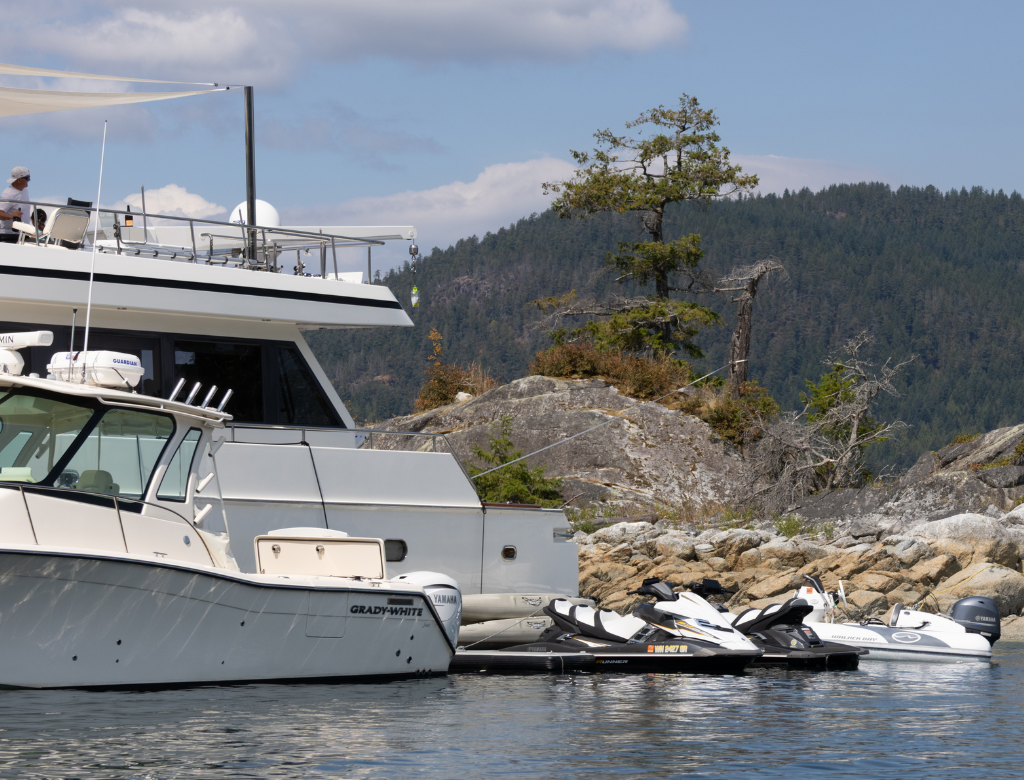
Many boaters use a stern tie to keep their vessel from swinging while anchored in narrow coves. Traditionally, some have wrapped their stern line around a convenient tree along the shoreline. Unfortunately, this seemingly simple practice can have serious consequences.
As boats move with changing tides, wind, and wakes, the stern line constantly shifts and rubs against the tree’s bark. This repeated friction strips away the protective outer layer that the tree relies on to transport nutrients and defend itself against insects, disease, and decay.
Over time, the damage can completely girdle the trunk, cutting off the flow of water and nutrients between the roots and the canopy. Once this happens, the tree slowly declines and may eventually die. Even if a tree survives, damaged bark leaves it vulnerable to fungi, insects, and environmental stress.
Unlike many other trees, arbutus trees are especially susceptible to injury because of their naturally thin, delicate bark. Once damaged, they recover very slowly, if at all.
Stern Tying to Trees and the Law
In National Parks, tying a boat to any living tree is illegal under federal parks regulations. You can face fines or be ordered to move. It is strictly prohibited in national parks like the Gulf Islands National Park Reserve. In provincial parks and on Crown Land, it is not blanket-illegal everywhere; however, damaging or cutting native flora on Crown land or in provincial parks is prohibited.
Why Arbutus Trees Deserve Extra Protection
The arbutus is one of the signature trees of British Columbia’s southern coast. Its smooth cinnamon-colored bark, twisting branches, and evergreen leaves make it instantly recognizable. Arbutus trees grow slowly and thrive in very specific coastal conditions, often clinging to rocky shorelines where few other trees can survive.
These remarkable trees provide important habitat for birds, insects, and other wildlife while helping stabilize fragile coastal soils. Due to their ecological value and sensitivity to disturbance, protecting arbutus trees is a priority in many marine parks.
Arbutus Vulnerability: Arbutus trees have delicate, peeling bark that is exceptionally sensitive to friction. Unprotected synthetic lines sawing back and forth with the tide will quickly girdle and kill a live tree.
Every scar caused by an improperly secured stern line can remain visible for decades. In popular anchorages where hundreds of boats visit each season, repeated damage accumulates year after year, threatening trees that may be well over a century old.
The Better Solution: Stern Tie Pins
Fortunately, protecting shoreline trees is easy.
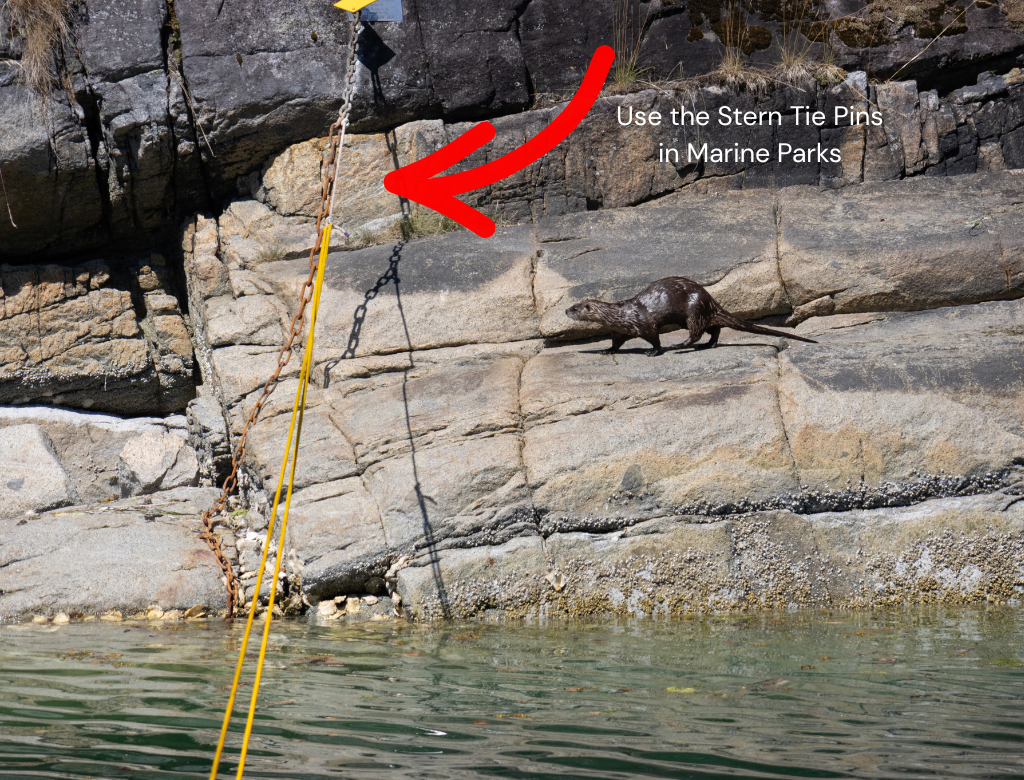
Instead of wrapping your stern line around a tree, use designated stern tie pins or install your line around an approved shoreline anchor point where permitted. Stern tie pins are designed specifically to secure boats without placing stress on living vegetation. By transferring the load from the tree to a metal pin anchored into suitable rock, boaters can enjoy a secure stern tie while eliminating bark damage and reducing erosion around tree roots. This simple change helps preserve the shoreline while maintaining safe anchoring practices.
Using stern tie pins also provides a more reliable attachment point that is less likely to shift or loosen as conditions change throughout the day. Every responsible boater can make a difference simply by choosing the right attachment point.
Small Actions Create Lasting Conservation
Marine parks depend on everyone doing their part. Responsible anchoring, respecting wildlife, packing out garbage, minimizing wake, and using proper stern tie practices all contribute to healthier coastal ecosystems.
While individual actions matter, conservation also requires ongoing investment. Maintaining marine parks, restoring damaged habitats, installing environmentally friendly infrastructure like stern tie pins, and supporting educational programs all require long-term funding.
That is why community support plays such an important role.
Supporting the Future of BC’s Marine Parks
Organizations such as Marine Parks Forever work to enhance and protect British Columbia’s marine parks through stewardship, education, infrastructure improvements, and partnerships with park managers and volunteers. Their efforts help ensure that popular anchorages remain healthy and accessible while reducing impacts from increasing recreational use.
The BC Parks Foundation also plays a critical role in protecting the province’s incredible natural spaces. Through conservation projects, habitat restoration, and public engagement, the Foundation helps safeguard parks and ecosystems across British Columbia for future generations.
Donations to these organizations directly support projects that improve visitor experiences while protecting sensitive environments. Whether funding shoreline restoration, installing sustainable boating infrastructure, supporting scientific research, or expanding conservation initiatives, every contribution helps preserve the coast we all enjoy.
So, How Much Does it Cost?
Installing a single stern tie pin isn’t free. Between planning, permits, specialized marine crews, transportation by boat, drilling into solid rock, and ongoing maintenance, each pin can cost hundreds or even thousands of dollars to install and maintain, depending on the location. These simple pieces of infrastructure help protect fragile shorelines and prevent damage to living trees, making them one of the most effective conservation investments in BC’s marine parks. While many of us enjoy anchoring overnight in these incredible parks without paying a camping fee, their protection and maintenance still come at a cost. Consider donating for every night you spend in a marine park, just as you might pay for a night at a campground or marina. Your contribution to Marine Parks Forever and the BC Parks Foundation helps fund stern tie pins, habitat restoration, park improvements, and conservation projects that ensure these remarkable anchorages remain healthy, safe, and beautiful for generations of boaters to come.
Boaters Know Best. Help Us Find the Next Stern Tie Pin Location
Know an anchorage that could benefit from a stern tie pin? You can help make it happen. If you’ve found a location where boaters regularly tie to shoreline trees, or where a properly placed stern tie pin would improve safety and protect the environment, send your suggestion to the Marine Parks Forever Society. Include the name of the marine park or anchorage, the latitude and longitude, a few photographs of the shoreline and anchorage, and a brief explanation of why the location would benefit from a stern tie pin. Every proposed site is reviewed in partnership with BC Parks to determine whether it is environmentally appropriate, safe, and practical for installation. Many of the stern tie pins protecting BC’s marine parks today began with observations from experienced boaters who recognized a need and took the time to share it. You can submit your suggestion through the Marine Parks Forever Society website or by email, helping identify the next location where a simple stern tie pin can protect shoreline trees and improve the boating experience for everyone.
A Missy Goes Boating Recommended Read!
Having grown up in the country surrounded by forests, I’ve always had a deep respect for nature. The Hidden Life of Trees by Peter Wohlleben strengthened that appreciation by revealing the remarkable ways trees communicate, support one another, and function as interconnected communities. It’s a fascinating read that offers a deeper understanding of why protecting our forests and the shoreline trees in our marine parks is so important.
Peter reveals the fascinating ways trees communicate, support one another, and thrive as interconnected communities, changing how we understand forests and the natural world.

Stewardship Starts at Anchor
Boating is about enjoying nature, but it also comes with a responsibility to protect it. Choosing not to tie stern lines around trees, especially vulnerable arbutus trees, is one of the simplest and most effective ways to reduce our impact on BC’s marine parks.
The next time you anchor in a quiet cove, take a moment to look at the shoreline. Those trees have weathered storms, droughts, and changing seasons for decades, sometimes centuries. They deserve the same care and respect we hope future generations will show them.
By using stern tie pins, practicing responsible boating, and supporting organizations dedicated to marine conservation, every boater can help ensure that British Columbia’s spectacular marine parks remain healthy, beautiful, and thriving for years to come.
Together, our choices today will shape the coast that future boaters, families, and wildlife inherit tomorrow.