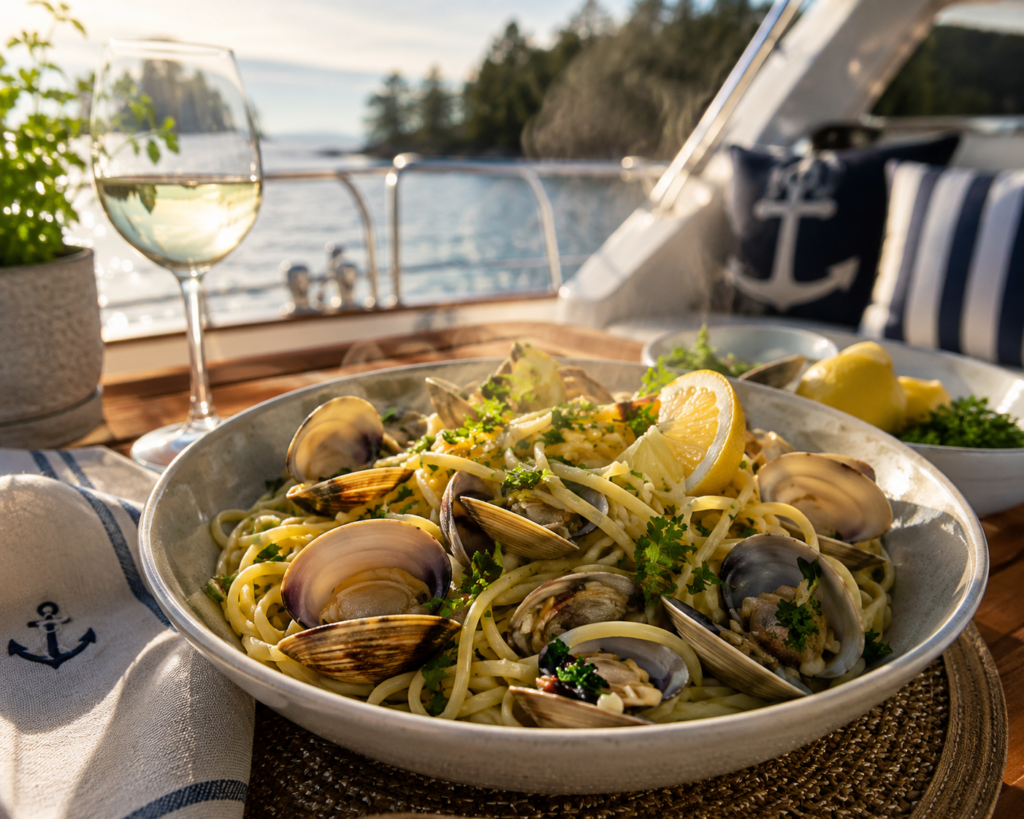
There are meals you remember because the restaurant was fancy. And then there are meals you remember because you harvested the main ingredient yourself while standing ankle-deep in the wet sand at low tide.
I’ll take the second one every time.
One of my favourite things about cruising the Pacific Northwest is that dinner occasionally presents itself in the most unexpected places. A quiet anchorage. A sandy beach. A falling tide. A clam shovel. Suddenly, what began as a morning walk becomes fresh clam linguine for dinner. The journey from beach to bowl is not just about the clams, but about the experience of creating a dish that captures the flavour of the Pacific Northwest.
In this post, I’ll explore the journey of clams from beach to bowl, culminating in the best clam linguine you’ll ever eat, all sourced from the beautiful Pacific Northwest.
It’s hard to explain. You dig the clams yourself, carry them back to the boat, let them purge in seawater for 24 hours, and the next day they are swimming in garlic, white wine, parsley, and perfectly cooked linguine.
If you’ve never harvested clams from the beaches of British Columbia, you’re missing one of boating’s greatest pleasures.
Clam Harvesting in British Columbia: Know Before You Dig
Before heading ashore with a bucket in hand, the first step is making sure harvesting is permitted and safe. The Government of Canada maintains current shellfish harvesting closures and advisories through Fisheries and Oceans Canada. The best resource is https://www.pac.dfo-mpo.gc.ca
The Best Beaches for Clam Digging in the Pacific Northwest
The perfect clam beach isn’t always the prettiest beach.
Look for:
- Broad tidal flats
- Sandy or sandy-mud bottoms
- Protected bays
- Areas with healthy shell deposits
When the tide recedes, small dimples, keyhole openings, or tiny water squirts often reveal where clams are hiding below the surface. I’ve spent more than one low tide wandering around with a bucket, convinced there are no clams anywhere, only to discover they were quietly sitting just a few centimetres below my feet the entire time. Clams are remarkably good at hide-and-seek.
How to Harvest Clams Successfully
Most recreational harvesters use either a clam shovel or a hand rake.
The process is surprisingly simple:
- Locate signs of clams.
- Dig carefully around the area.
- Sift through the sand.
- Place legal-sized clams in a bucket.
- Return undersized clams immediately.
The key is gentle digging. One of my favourite parts of clam digging is that it slows you down. Much like boating itself, success comes from paying attention rather than rushing.
Letting Clams “Spit”: The Most Important Step
There is no immediate pasta gratification. Fresh clams need time to purge the sand from their systems before cooking. Most boaters call this “letting them spit.” Back on the boat, place your clams in a bucket of clean seawater or use a clam net that you can hang from the back of your boat. It takes about 24 hours for the clams to naturally filter the water and expel much of the sand they’ve collected.
The Best Clam Linguine Recipe for Boaters
Like many great Italian dishes, it’s beautifully simple.
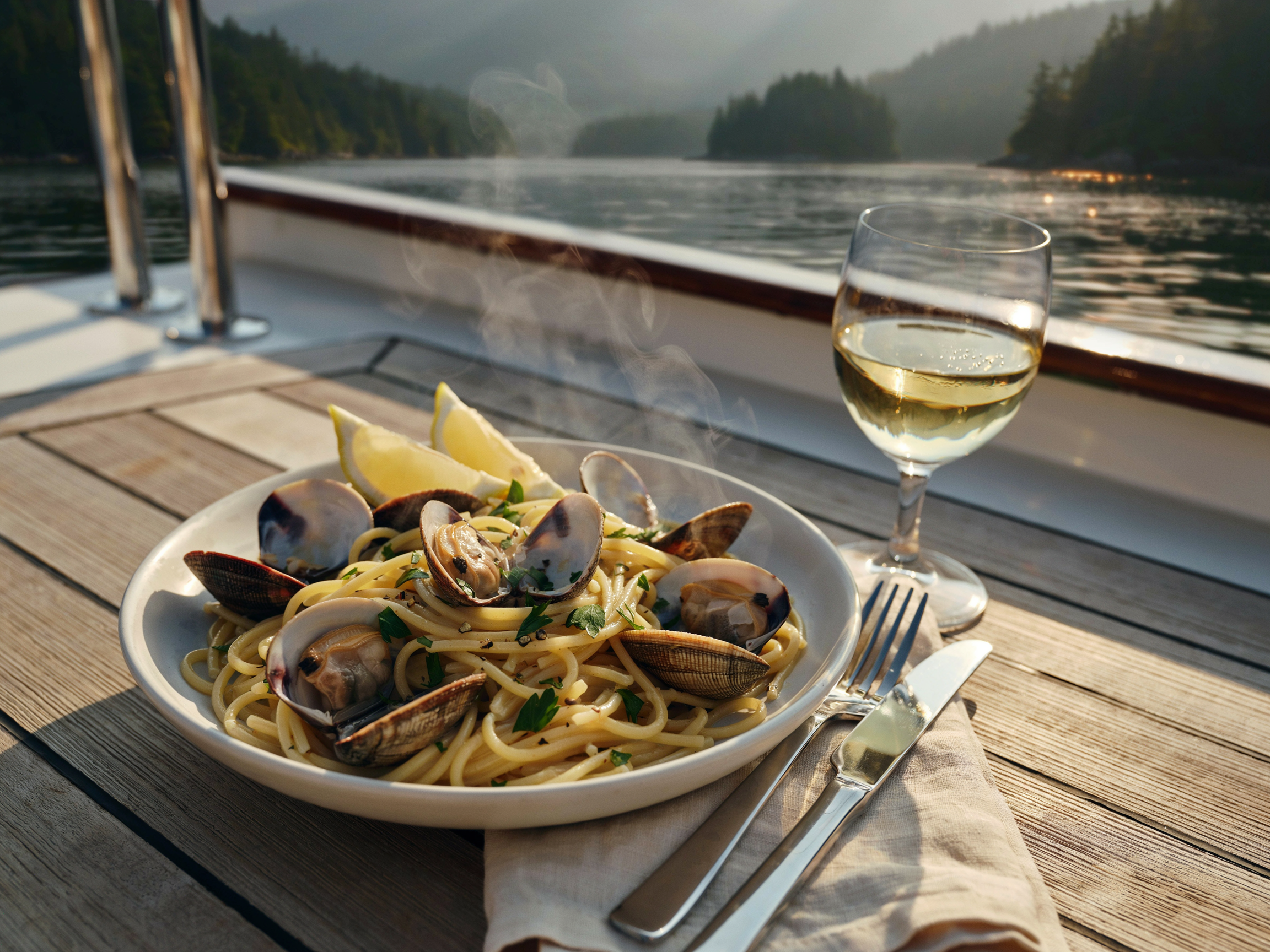
The Best West Coast Clam Linguine
Ingredients
Equipment
Method
- Cook linguine until just al dente. Save one cup of linguine starch water.
- Heat olive oil and butter in a large pan. Add garlic and cook gently until fragrant.
- Pour in white wine and bring to a simmer.
- Add clams and cover. Cook until the shells open, usually 5 to 8 minutes. Discard any clams that remain closed.
- Add cooked pasta directly into the sauce.
- Add one cup of linguine starch water. The starchy, salty water acts as a natural binder and emulsifier, transforming your ingredients into a cohesive, velvety coating that clings perfectly to every noodle.
- Toss with parsley, lemon zest, lemon juice, and black pepper.
- Finish with a drizzle of good olive oil.
- Serve immediately.
Pairing Wine with Fresh Clam Linguine
This is one of those dishes that practically chooses its own wine.
My favourites include:
- BC Pinot Grigio
- Sauvignon Blanc
- Unoaked Chardonnay
- Dry Rosé
The goal is freshness and acidity rather than heaviness. The wine should support the clams, not overpower them. And if a little of the bottle accidentally ends up in the cook while preparing dinner, that’s between you and the tide.
Why Foraging Makes Boating More Meaningful
The Pacific Northwest offers incredible opportunities for responsible shellfish harvesting, and I think many boaters overlook how rewarding it can be.
It’s affordable.
It’s delicious.
And it creates stories you’ll remember long after the season ends.
Final Thoughts: The Ultimate Pacific Northwest Boat Dinner
Fresh clam linguine may be one of the most Pacific Northwest meals imaginable. A low tide beach walk. A bucket of clams. Garlic sizzling in olive oil. White wine in the pan. Friends gathered around the table as the sun drops behind the trees.
It doesn’t require complicated ingredients or expensive equipment. Just a little patience, a little curiosity, and a willingness to get your boots muddy.
And honestly, some of the best boating adventures begin exactly that way.