10 Things Smart Boaters Do When They’re Not Boating to make next season even better.
There’s a peculiar thing about boating in the Pacific Northwest. We spend the summer wishing there were more hours in the day, then spend the winter wondering what to do with all those rainy afternoons. Well, perhaps not all of them. There are still plenty of things to do around the house, but I’ve discovered that winter is also a wonderful time to get a little ahead of next year’s boating season.
After more than thirty years of boating, I’ve learned that some of the most useful improvements don’t involve buying anything new. They involve getting organized, learning how to use equipment we already own and finally tackling those little projects we’ve been promising ourselves we’d get around to.
We continue using As You Wish II throughout the winter, although our adventures are considerably shorter than the four-month cruises we enjoy during the summer. That makes this time of year particularly useful for reviewing what worked, what didn’t and what we might do differently next season.
So, before the Seattle and Vancouver boat shows arrive and we start dreaming about all the things we could add to our boats, here are ten projects worth tackling while the rain falls.
1. Revisit Your Logbook and See Where the Summer Took You
One of my favourite winter activities is looking back through our cruising logbook. It’s amazing how quickly the details of a summer disappear, particularly when you’ve visited dozens of anchorages and travelled hundreds of nautical miles.
Start by reviewing your notes. Which anchorages were favourites? Were there places you’d like to revisit? Did you discover a particularly good stern-tie location, a tricky entrance or a wonderful little restaurant worth remembering? Those details are much more useful when they’re recorded than when you’re trying to remember them eight months later.
This is also a great opportunity to do a little arithmetic. Add up the nautical miles you travelled, the engine hours you accumulated and the fuel you purchased throughout the season. If you’ve recorded your fuel consumption, you can calculate your average litres per nautical mile and get a much clearer picture of what your cruising adventures actually cost.
I find these numbers fascinating. They help with budgeting, maintenance planning and estimating fuel requirements for future trips. They also provide a surprisingly satisfying answer when someone asks how far you travelled over the summer.
And if your logbook has a few blank pages, now is an excellent time to fill in the details while you can still remember which anchorage had the spectacular sunset.
Don’t have a logbook? Check out my blog about why you should, https://missygoesboating.com/boat-gear/why-should-i-have-a-logbook-on-my-boat/
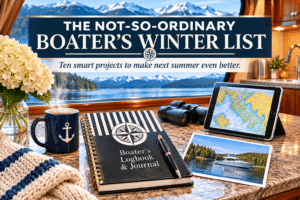
Every boater needs this elegant logbook to track essential trip details—weather, fuel, engine hours, and more—while journaling memorable experiences, ensuring organized records and cherished memories of every voyage.

2. Get to Know Your Chartplotter All Over Again
Modern marine electronics are extraordinary, but I suspect most of us use only a fraction of what they’re capable of doing. We have Garmin electronics aboard As You Wish II, and I’m constantly discovering features that deserve a closer look. Whether you use Garmin, Raymarine, Simrad or another system, winter is a wonderful time to sit down with the owner’s manual and explore the functions you haven’t quite mastered.
Manufacturers often provide excellent instructional videos on YouTube. You can learn how to organize waypoints, create routes, customize chart displays, manage alarms and understand features that may have been hiding in plain sight for years.
It’s also a good time to check for software and chart updates. Depending on your equipment, updates may be available through Wi-Fi, a mobile app or a memory card. Before installing anything, confirm compatibility, follow the manufacturer’s instructions and back up important settings, routes and waypoints.
I particularly like the idea of spending a rainy afternoon learning something new without the distraction of actually navigating the boat. It’s much easier to experiment with a menu when you’re comfortably tied to the dock than when you’re approaching an unfamiliar harbour.
3. Give Your Safety Equipment a Proper Inspection
Safety equipment has an unfortunate habit of being ignored until the moment we need it. And that’s not a particularly good time to discover that something has expired.
Winter is an excellent opportunity to inspect your flares, fire extinguishers, first-aid supplies, lifejackets and other safety equipment. Check expiry dates, inspect for damage and confirm that everything is stored where it belongs.
Fire extinguishers deserve more than a quick glance at the gauge. Check their condition, maintenance requirements and inspection dates according to the manufacturer’s instructions and applicable regulations. Check flares for expiry and replace them when required, and dispose of outdated pyrotechnics through an appropriate collection program.
While you’re at it, check batteries in flashlights and other emergency equipment, review the contents of your first-aid kit and make sure everyone aboard knows where the safety gear is located.
There’s nothing particularly glamorous about this project, but it’s one of those jobs that provides enormous peace of mind. And unlike polishing stainless steel, you don’t have to admire the results to appreciate the value.
4. Make Your Boat Project List Before the Boat Shows
Every summer, I find myself making mental notes about things I’d like to improve aboard the boat. A storage solution that isn’t quite working. A piece of equipment that could use an upgrade. Something that needs repairing but isn’t urgent enough to interrupt a beautiful afternoon at anchor.
By November, those little observations tend to disappear unless I’ve written them down.
This is the perfect time to review your maintenance records and create a proper project list. Separate the jobs that must be completed before next season from the improvements that would simply make life aboard more enjoyable. Then consider which projects you can tackle yourself and which require professional assistance.
With the Seattle and Vancouver boat shows approaching, having a list is particularly useful. Instead of wandering through the displays and falling in love with something you didn’t know you needed, you can arrive with specific questions, measurements and a realistic budget.
Of course, there’s nothing wrong with discovering something wonderful at a boat show. That’s half the fun. But it’s considerably easier to make a good purchasing decision when you’ve already identified the problem you’re trying to solve.
5. Finally Organize Those Boating Photographs
This one is particularly close to my heart.
I take an enormous number of photographs throughout the summer. Beautiful anchorages, wildlife encounters, interesting boats, sunsets and approximately seventeen versions of the same spectacular view because I can’t quite decide which one I like best.
By the end of the season, the collection can become rather overwhelming.
Whether you store your photographs in Google Drive, iCloud, Apple Photos, Lightroom or another system, winter is a wonderful time to get organized. Delete obvious duplicates and blurry images, create folders or albums for your destinations and make sure your favourite photographs are properly backed up.
I like organizing images by year and destination because it makes finding a particular anchorage or adventure much easier when I’m writing an article or planning a return visit.
If your photographs are stored in the cloud, check that they’re actually syncing and that you have another reliable copy of anything important before deleting files. A cloud account is convenient, but it shouldn’t be your only protection against losing years of memories.
And while you’re sorting, why not choose a few favourites to print? We take thousands of photographs, yet some of the best deserve to live somewhere other than a computer screen.
6. Give Your Dinghy Some Attention
Our dinghies work remarkably hard throughout the boating season. They’re our transportation to shore, our little exploration vehicles and occasionally the means of getting somewhere that would be impossible to reach with the big boat.
Winter is a good time to clean the dinghy thoroughly, inspect the tubes or hull, check the outboard and review the condition of your safety equipment. Check the lines, fenders, seating, and storage arrangements. It’s amazing how much easier a dinghy excursion becomes when everything has a sensible place.
You might also consider improving your dinghy navigation setup. A small chart plotter can be a wonderful addition, particularly when exploring unfamiliar shorelines. Alternatively, a marine navigation app such as Navionics on your phone or tablet can provide a convenient reference, provided you have downloaded the appropriate charts and understand its limitations.
A secure, weather-resistant phone holder can make the setup much more practical. Just remember that phones aren’t a substitute for keeping a proper lookout, and battery life, water exposure and screen visibility can all become issues.
Sometimes the smallest improvements make the biggest difference. A better cup holder, a convenient phone mount or a sensible place to store the dock lines can transform a cluttered little dinghy into a much more enjoyable way to explore.
7. Rethink Your Provisioning Before Next Summer
After spending roughly four months cruising, I’ve become surprisingly interested in the science of provisioning. Not the complicated kind involving spreadsheets and mathematical formulas, but the practical business of figuring out what we actually use.
I recently wrote about this in The Great Boat Reset: What I Do When Cruising Season Ends, where I shared what comes home, what stays onboard and what I’ve learned about preparing for an extended summer cruise.
This year, I discovered that I’d packed more pasta than we needed and enough frozen citrus to keep a small naval fleet comfortably supplied. On the other hand, I hadn’t brought nearly enough warm clothing for our unpredictable May and June weather.
Those little discoveries are exactly what should shape next year’s provisioning list.
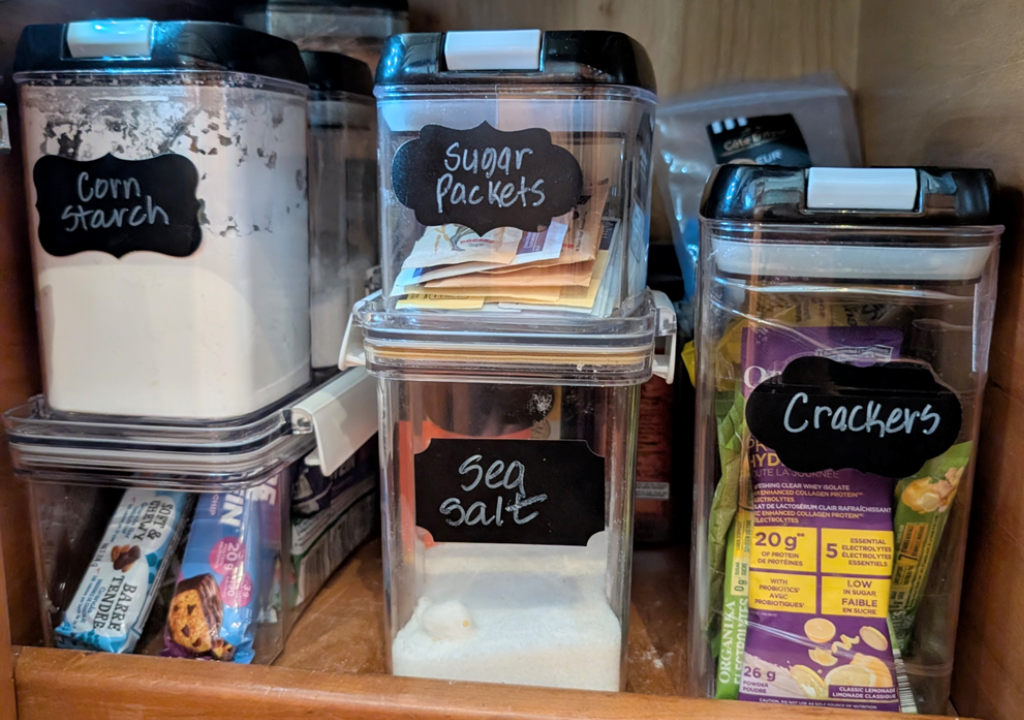
Winter is a wonderful time to review what you used, what you wasted and what you wished you’d brought. Check pantry inventories, rotate older supplies and make notes about quantities. If you keep the boat in use throughout the winter, as we do, you can gradually use up provisions rather than starting every season with an entirely new collection of groceries.
My most valuable provisioning tool remains a pencil and an eraser. I make notes throughout the winter, and by May I have a much more accurate list than anything I could create from memory.
The goal isn’t to bring everything you might possibly need. It’s to bring enough of the things you actually use.
8. Research One Destination You’ve Always Wanted to Visit
We all have those places.
An anchorage someone recommended years ago. An island we’ve passed but never explored. A destination that always seems just a little too far away to fit into our summer plans.
Why not choose one and make it a priority for next season?
Start with a cruising guide, then explore charts, marina information, local attractions and possible routes. Look into distances, fuel requirements, currents, weather considerations and places to stop along the way. Research hiking trails, interesting communities and anything else that might make the destination worth visiting.
I particularly enjoy discovering what there is to do once we’ve arrived. A beautiful anchorage is wonderful, but finding an interesting trail, a quiet beach or a little community to explore often turns a pleasant stop into a memorable adventure.
You don’t need to plan every minute. In fact, I think some of the best boating experiences happen when there’s room for a little spontaneity. But knowing what’s possible gives you more choices when the opportunity arrives.
9. Learn Something New From Other Boaters
One of the things I love about boating is that there’s always something more to learn, regardless of how long you’ve been doing it.
A formal course can be a wonderful investment, whether you’re interested in navigation, boat handling, weather, marine electrical systems or another subject. But learning doesn’t always require enrolling in a classroom.
YouTube has become an extraordinary resource for boaters. Channels are devoted to marine electronics, maintenance, cruising destinations, equipment reviews, and practical boating techniques. Some of the most useful videos come from people who own boats similar to yours or cruise the same waters.
I particularly enjoy seeing how other boaters organize their equipment, approach a destination or solve a problem aboard. Sometimes a five-minute video can introduce an idea that makes you wonder why you hadn’t thought of it years ago.
Naturally, not everything on YouTube should be treated as expert advice. For safety-critical procedures, equipment installation and technical maintenance, I always recommend checking the manufacturer’s instructions and reliable professional sources.
But for inspiration, new ideas and discovering what other boaters have learned through experience, it’s a wonderful place to spend a rainy afternoon.
10. Start Planning Next Season Before the Calendar Fills Up
Here’s something I’ve learned over the years: summer has a remarkable way of becoming busy long before it arrives.
Between family commitments, social events, appointments and all the other things that compete for our time, those wonderfully open weeks we imagined spending on the water can disappear surprisingly quickly.
So why not start planning now?
Look at your calendar and identify the weeks you’d like to spend boating. Consider the destinations you want to visit, the friends you’d like to meet and any events or gatherings you’d like to attend. If you’re planning an extended cruise, start thinking about the general route and the time you’ll need to enjoy it without feeling rushed.
You don’t have to make reservations for every night or create a schedule so rigid that the weather becomes an inconvenience. Quite the opposite. I find that planning the bigger pieces early gives us more freedom to enjoy the smaller moments when we’re actually underway.
And perhaps that’s the nicest thing about winter boating projects. They’re not simply about maintaining equipment or organizing cupboards. They’re about making the next season a little easier, a little more enjoyable and perhaps a little more adventurous.
A Little Winter Work, A Lot More Summer Fun
I’ve come to appreciate the quieter months for what they offer. There’s time to look back at where we’ve been, think about what we’ve learned and make a few improvements before the next big adventure.
Some of these projects take an afternoon. Others might occupy several rainy weekends. But none requires waiting until spring, when the weather improves and there are suddenly far more interesting things to do than organize a cupboard or update a chart plotter.
And if you’re anything like me, you’ll probably discover a few additional projects along the way.
After all, there’s no such thing as a finished boat. Only a boat with a slightly shorter to-do list.
What winter boating project is at the top of your list? I’d love to hear what you’re planning to tackle before next season.